
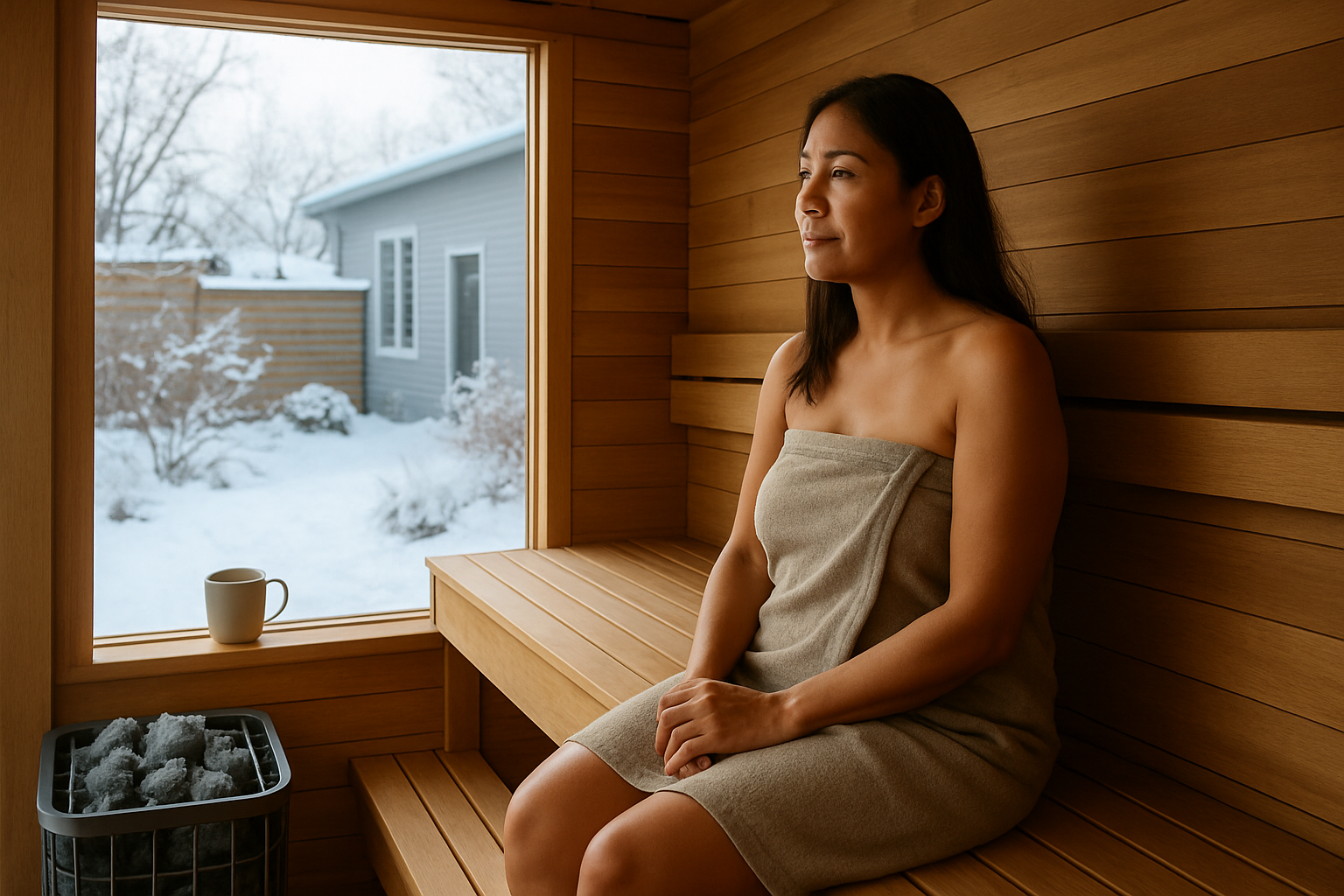
People often buy into sauna for heat, recovery, or outdoor living. But one of the most common reasons people keep using it is simpler: they sleep better and feel calmer. That experience is real for a lot of people, though it's worth describing carefully. Sauna isn't a cure for insomnia, anxiety, or chronic stress, and it doesn't replace medical care or mental-health treatment. What it may do is support relaxation, ease the transition into rest, and become a repeatable ritual that makes evenings feel better.
How sauna may help with sleep
One of the strongest reasons sauna may help is thermoregulation. Sleep is tied closely to changes in body temperature, and a large review of passive body heating found that warming the body before bedtime, within a planned window, could improve sleep onset and sleep efficiency. Most of that research focused on warm baths or showers rather than sauna specifically, so this is an informed inference, not direct proof. Still, the underlying idea holds up: warming the body and then letting it cool may help nudge it toward sleep more naturally.
Sauna may also help simply by creating separation from the day. The heat, quiet, and physical stillness act like a reset, and good sleep isn't only about temperature, it's also about shifting out of work mode and giving the mind room to slow down.
What the research actually shows
The direct sleep-and-stress research on sauna is promising but not as strong or extensive as a lot of wellness headlines suggest. A 2024 population study from northern Sweden found sauna users reported better general health, more energy, better sleep, less anxiety, and greater happiness than non-users, but the study was observational. Sauna users also differed in age, activity level, and other lifestyle factors, so it can't prove sauna alone caused those outcomes, though it does support the idea that regular sauna use tracks with a more positive wellness pattern overall.
Broader reviews of sauna and mental well-being suggest possible benefits for mood, relaxation, and stress perception, while making clear the evidence base is still developing and needs stronger intervention studies. That's the right level of confidence for this topic: encouraging, not exaggerated.
Stress relief is often about the ritual
A sauna session forces you to stop. You step away from your phone, your email, the pace of the day. You sit in a warm, quiet room, breathe, and slow down. That alone, before you even get into physiology, is already a solid stress-management pattern.
For a lot of homeowners, the daily or near-daily ritual is the real benefit, more than the heat itself. It's the habit, and a well-built home sauna makes that habit easy to repeat, which is usually what turns a wellness idea into an actual routine.
A practical evening routine
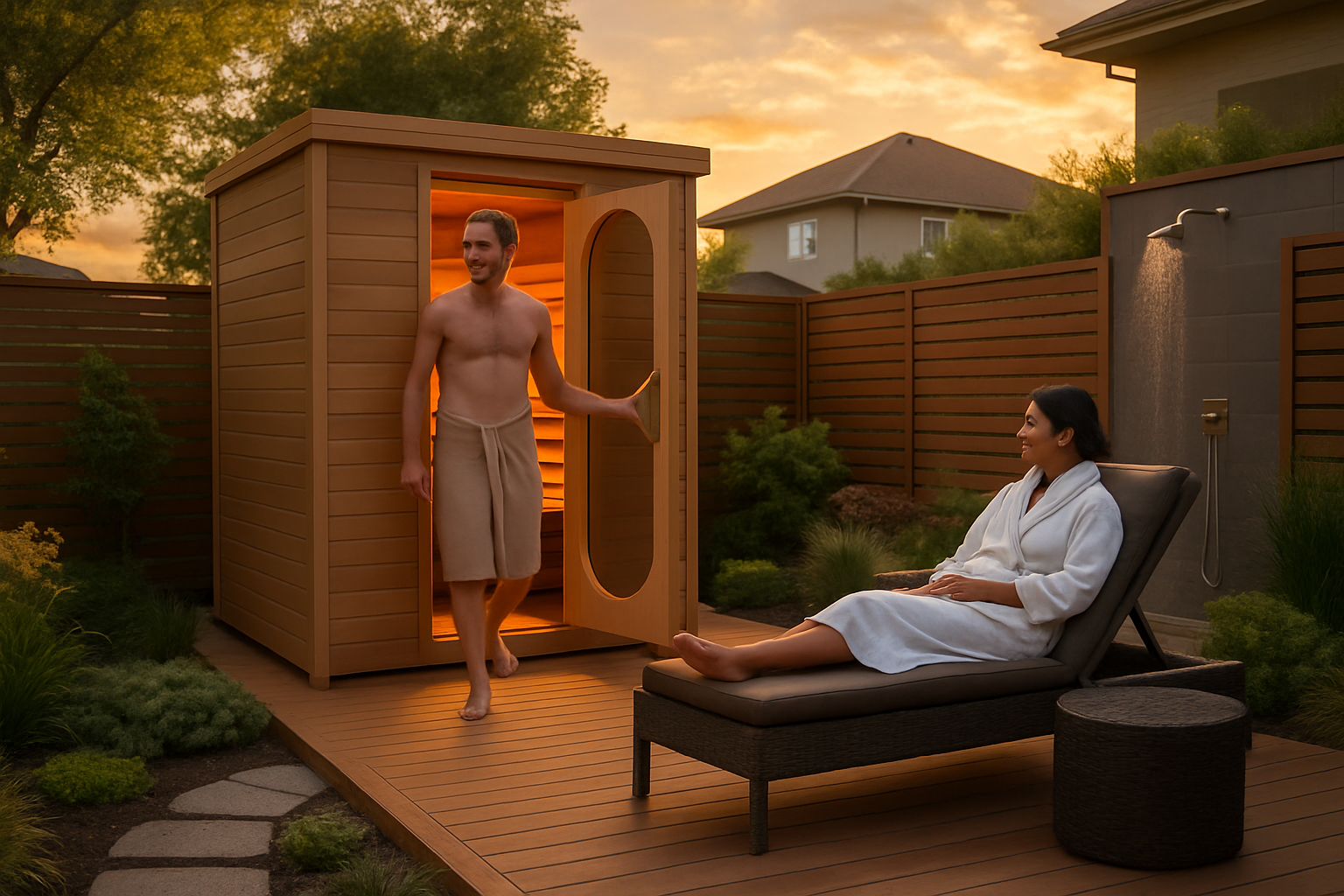
For sleep and stress, sauna usually makes the most sense in the evening. A simple version works best: finish dinner, let the evening slow down, spend some quiet time in the sauna, cool down gradually, rehydrate, and ease into the rest of the night instead of jumping back into work or heavy stimulation. Based on the passive-heating research, many people benefit most when heat exposure happens before bed rather than right at the moment they're trying to fall asleep.
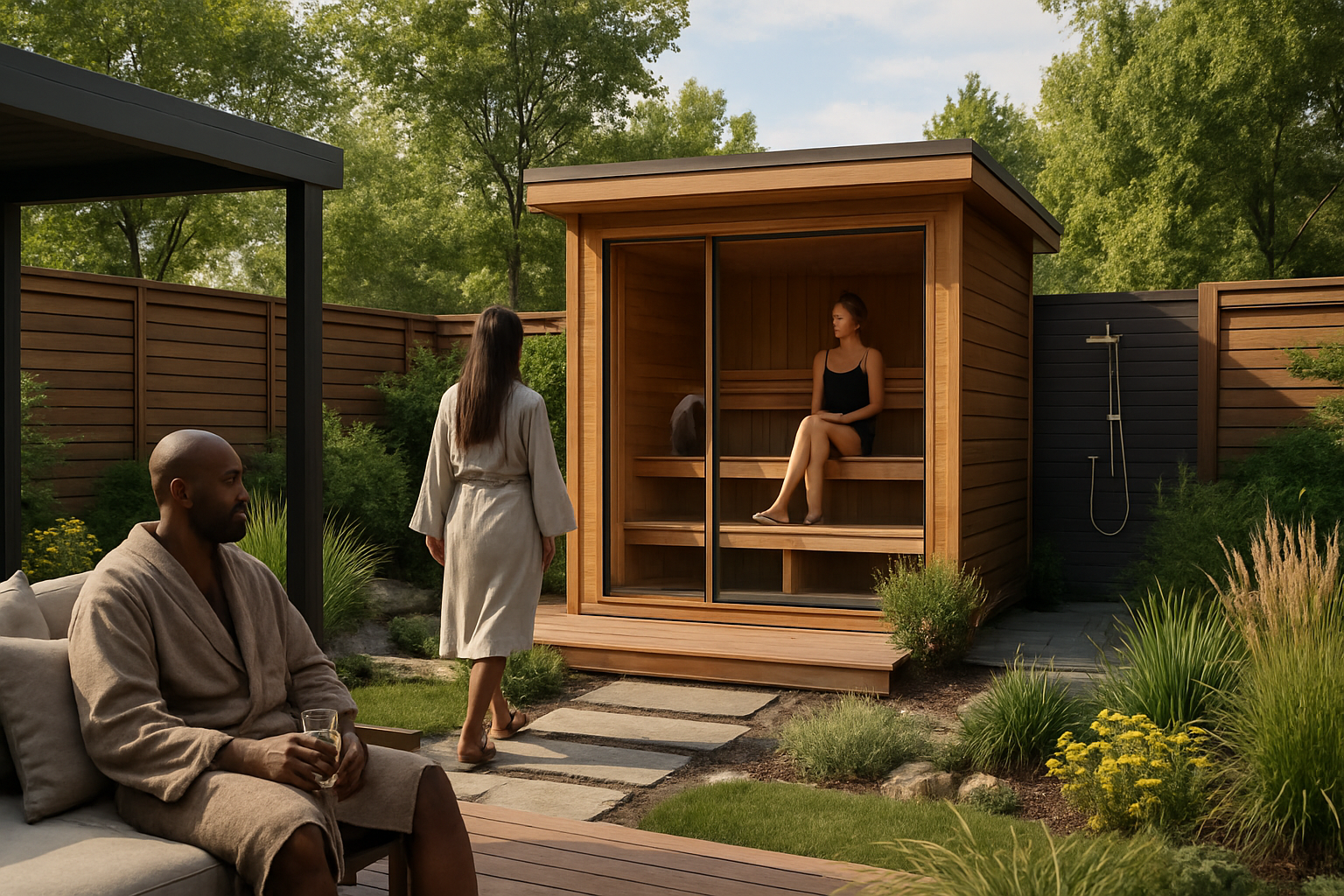
The goal isn't to turn sleep into another performance project, just to build a calm runway into the night: no phone in the sauna, dimmer light afterward, water or tea during the cool-down, a comfortable path from sauna to shower to bed. A backyard sauna helps here specifically because it's a physical change of environment. You leave the house, reset, and come back in a different state.
How often helps
There's no single proven sauna dose for sleep and stress. The strongest long-term studies compare people using sauna once a week, a few times a week, or more often, but those categories describe habits, not a prescription. For stress relief, consistency probably matters more than intensity: a shorter, repeatable session a few times a week likely beats an occasional extreme one that leaves you depleted. Start conservatively, pay attention to how you feel afterward, and build a routine you can actually sustain.
Realistic expectations
Sauna may help you unwind, feel sleepier, settle into a better evening rhythm, and feel calmer and more recovered from the day. But it isn't a treatment for chronic insomnia, major anxiety, burnout, depression, trauma, or other medical and mental-health concerns. Those deserve real care, and sauna shouldn't be used to avoid addressing bigger issues. It's also worth remembering a bad routine can overpower a good sauna session. Late-night alcohol, screens, poor sleep habits, or extreme stress don't get erased by heat alone. Sauna works best supporting the bigger system, not replacing it.
Who should be cautious
Heat places real demands on circulation and hydration. People with unstable cardiovascular disease, very low blood pressure, kidney or fluid-balance problems, pregnancy-related concerns, or medications that affect blood pressure, sweating, or heat tolerance should get personalized medical advice before using sauna regularly. Alcohol should be avoided with sauna use since it raises the risk of dehydration, low blood pressure, and accidents. If you feel dizzy, faint, unusually short of breath, nauseated, or generally unwell, stop the session.
The Turon view
At Turon Saunas, we see sleep and stress benefits as part of the bigger case for owning one. A home sauna isn't just a feature in the yard, it's a daily ritual space, and when it's designed properly for Manitoba living, it becomes somewhere you can use year-round to step away, breathe, warm up, and reset. Not hype, not miracle claims, just a repeatable practice that makes home feel better: more calm in the evening, more real time away from screens, a more meaningful way to end the day.
This article is general educational information and is not medical advice. Anyone with medical conditions, pregnancy, significant sleep problems, mental-health concerns, or questions about medication should speak with a qualified healthcare professional.
