
Can You Add Lighting to a Sauna? Safe, Warm, and Atmospheric Ideas
Yes, you can add lighting to a sauna, and it's one of the easiest ways to make a custom sauna feel more refined, calming, and intentional. Done right, it softens the room, highlights the wood, improves safety, and turns an already good sauna into a much better one.
Sauna lighting isn't like ordinary room lighting, though. The heat runs higher, the humidity can too, the heater creates a real danger zone, and wiring has to be planned carefully. The best sauna lighting usually works because it's subtle, not because it tries hard. A good sauna should feel warm and atmospheric, not bright, clinical, or gimmicky.
The problem with treating sauna lighting like normal lighting
A lot of people picture lighting as the finishing touch you pick at the end. In a sauna, that's usually a mistake. Treat it as an afterthought and you can end up with fixtures in the wrong places, awkward wiring, harsh overhead light, poor switch locations, or a room that photographs well but feels uncomfortable to actually sit in.
The other common mistake is chasing novelty. Colour-changing LEDs, bright ceiling fixtures, and dramatic accent lighting sound exciting, but they're rarely what makes the room better. In a hot room, simple usually wins, and the goal isn't making the sauna feel like a lounge or a nightclub. It's supporting calm, warmth, and rest, which is why the best lighting decisions get made early, alongside the bench layout, heater placement, wall detailing, and electrical planning, not tacked on afterward.
Start with safety and heat-rated components
Safety comes first. Not every fixture, strip light, lens, driver, or dimmer suits sauna conditions, so components need to be selected specifically for sauna or high-heat use and installed to the manufacturer's instructions. Placement matters just as much as the fixture itself. The area near the heater and the upper hot-air zone are typically the harshest spots in the room, so avoid placing lighting there casually unless the exact product is approved for that location. Something that works fine in a bathroom, closet, or on a deck may not belong inside the sauna.
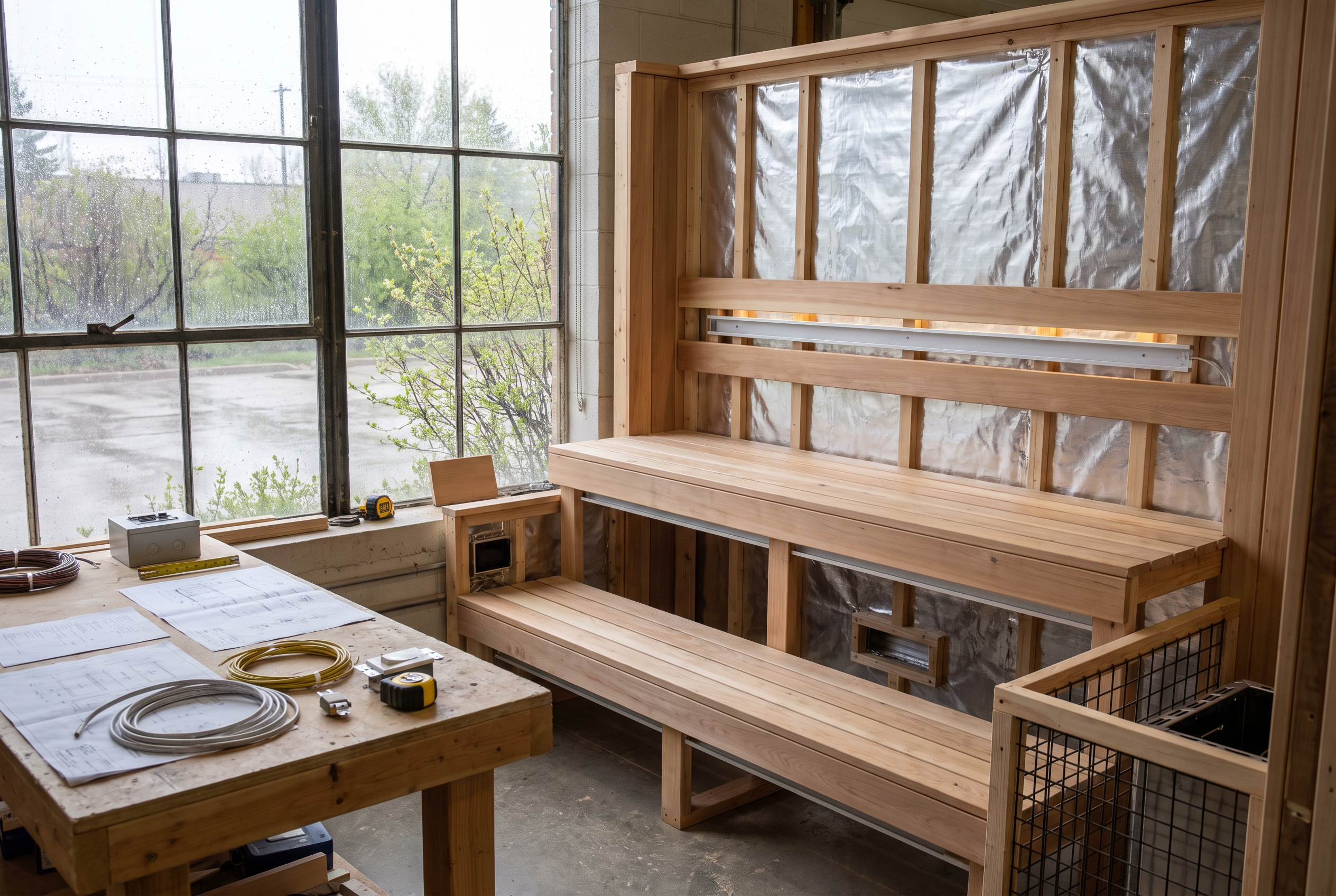
Electrical planning needs to be coordinated properly too, since wiring routes, penetrations, concealed channels, fixture housings, and controls all have to get worked out before the room closes up. For most homeowners, the move is simple: choose heat-rated products, follow the specs carefully, and coordinate installation with a qualified electrician.
The best sauna lighting usually comes from indirect light
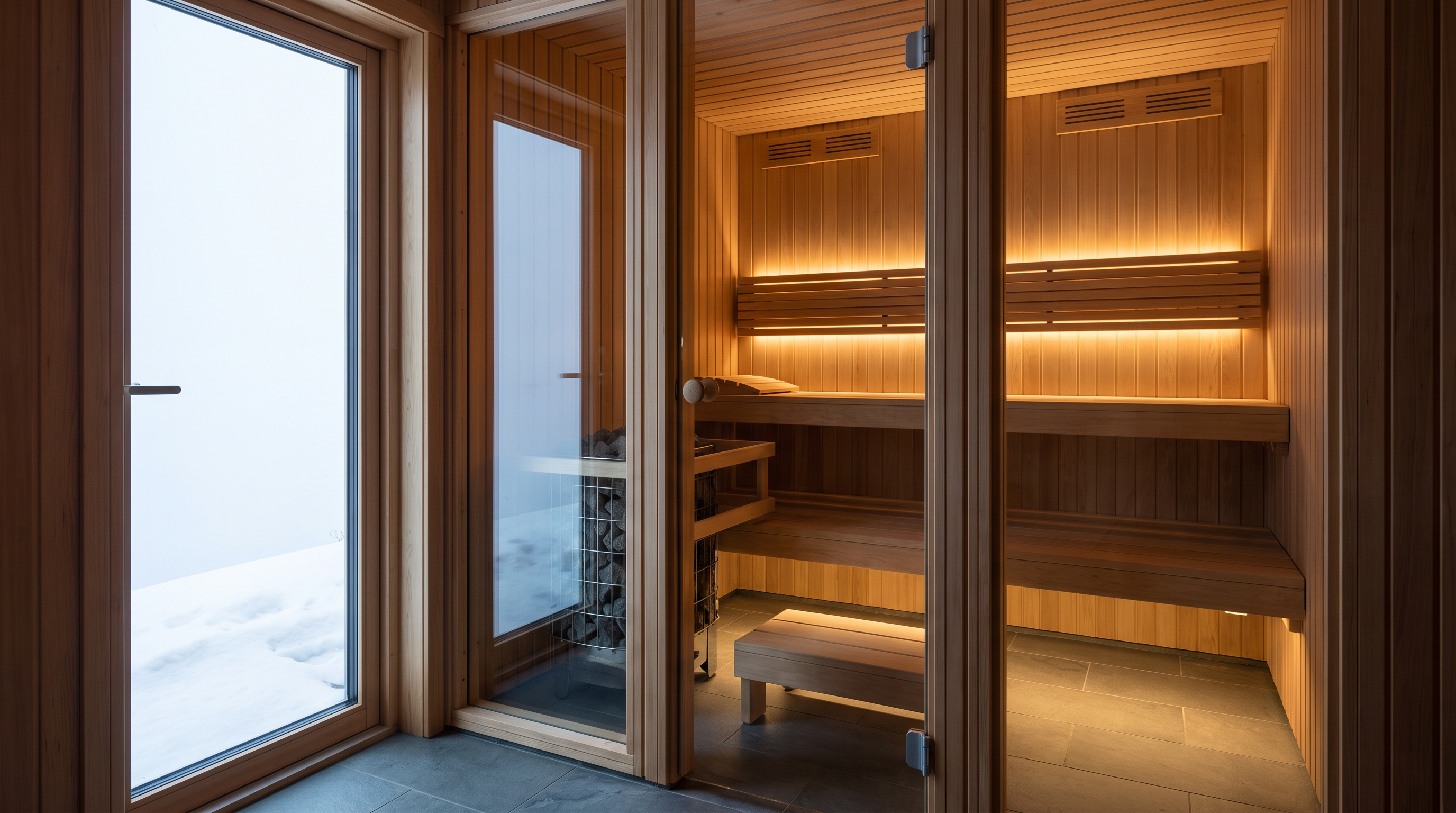
The most attractive lighting in most custom saunas is indirect: instead of shining a bright fixture at people's eyes, it washes the wood with a soft glow that makes the room feel quieter and more architectural. That's the logic behind the two most popular custom lighting moves, backrest lighting and under-bench lighting, covered in more detail below.
Warm light usually beats colour light in the hot room
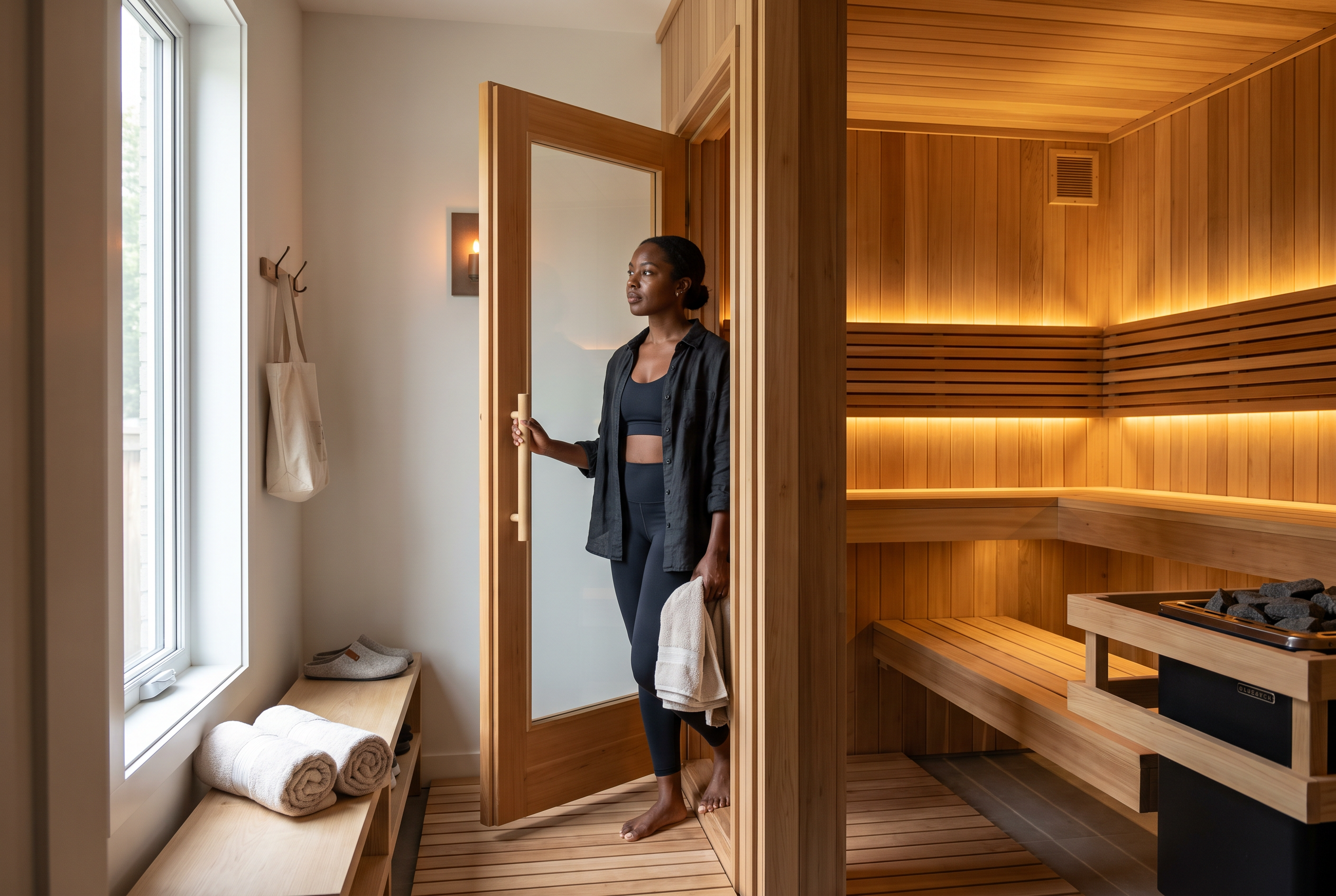
When people think mood lighting, they often jump straight to colour, but warm light is usually the better call inside the sauna itself. A soft warm-white or amber tone complements cedar, ThermoWood, and other sauna woods far better than bright white or colour-changing light, and makes the room feel more natural, restful, and premium. Cool white light can make a sauna feel sterile, and strong colour lighting can turn distracting or date the room fast. Even where RGB or tunable-colour systems are installed, most homeowners end up using warm tones most of the time. Colour still has a place, just not usually inside the hot room itself. Subtle colour options can make more sense in an adjacent lounge, change room, or recovery area, but the sauna itself tends to age better with warm, restrained light.
Good lighting ideas for a custom sauna
Backrest lighting
One of the strongest custom details available. It creates depth, highlights the bench wall, and gives the room a soft glow without any visible bright fixture.
Under-bench lighting
Adds atmosphere and improves visibility at the lower bench and step, especially useful in larger rooms or family saunas where more people are moving around.
Low wall fixtures or shielded sconces
A simple heat-rated wall light can work well placed low and away from the most intense heat zone, as long as it stays soft and shielded rather than exposed and glaring.
Step and access lighting
If the sauna has a lower step, access platform, or vestibule, subtle lighting there makes the entry sequence both safer and more welcoming.
Lighting beyond the hot room
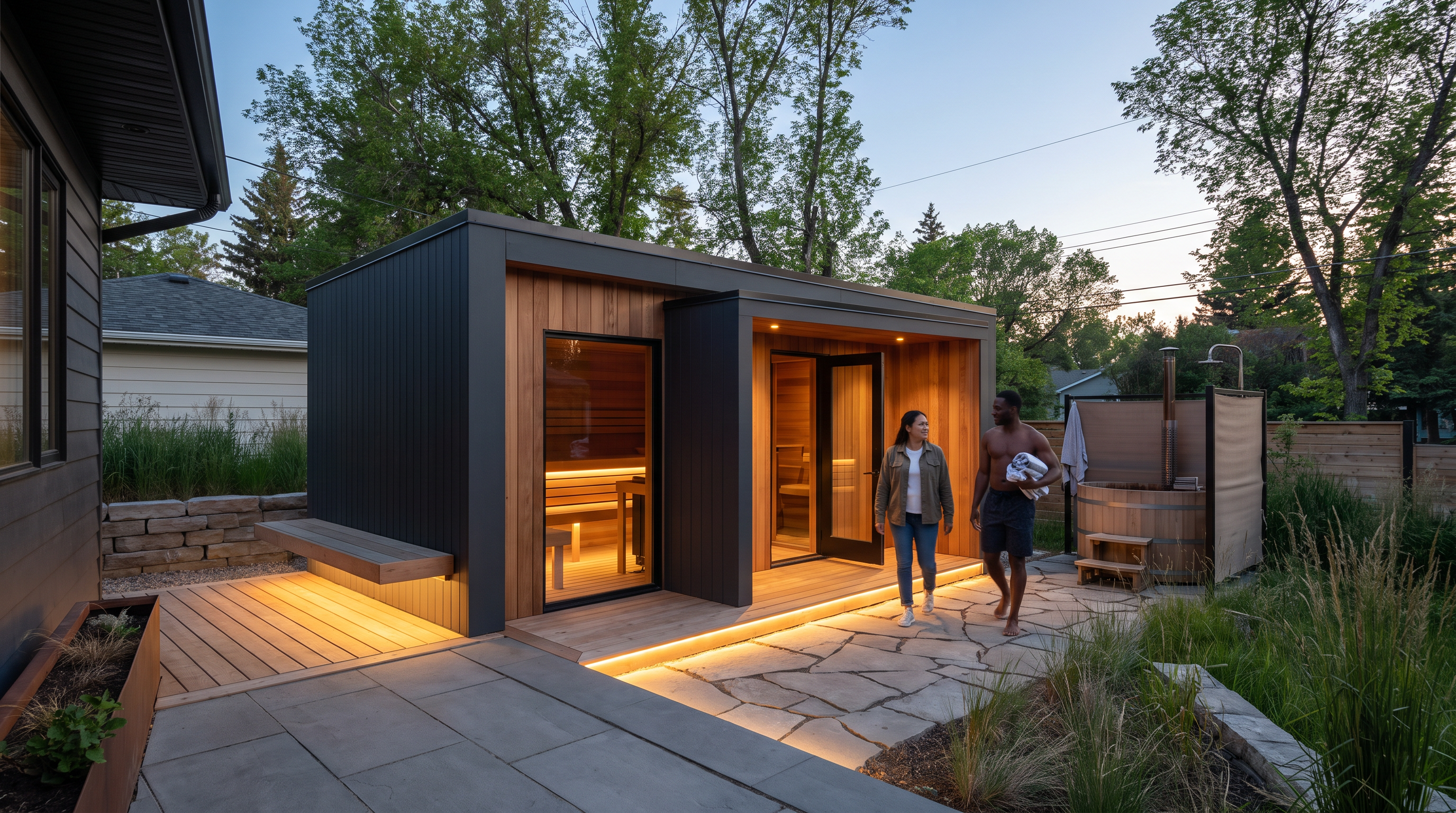
Some of the most valuable upgrades happen just outside the sauna itself: the vestibule, the exterior deck, the winter path, the shower or plunge area. Those zones round out the whole experience.
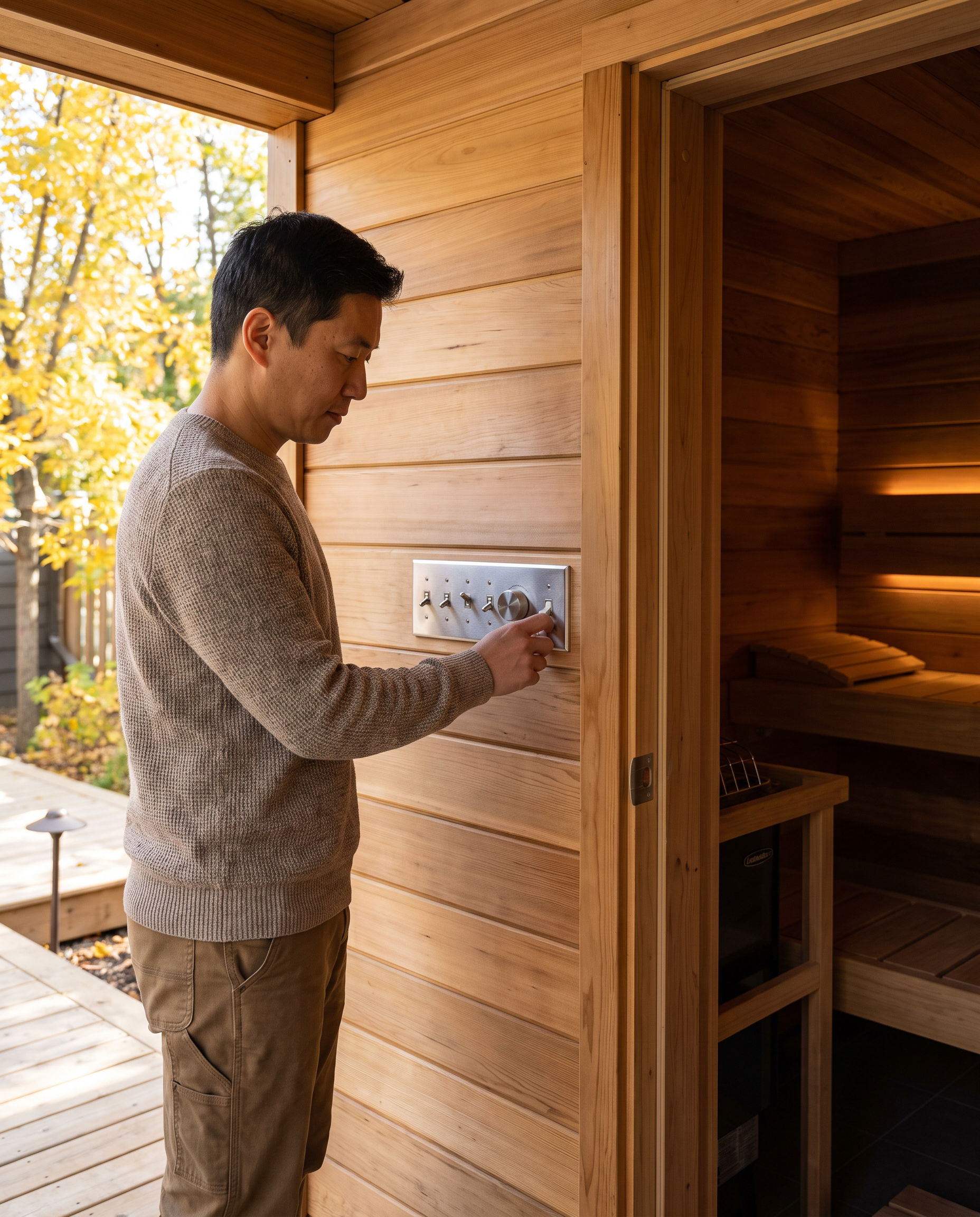
Dimming and controls matter more than people expect
A sauna doesn't need the same light level the whole time. A brighter setting works for cleaning, setup, or post-session care, and a softer one for the actual sauna experience, which is exactly what dimmers and layered controls are for. Instead of one switch running everything, separate control over the main sauna light, backrest lighting, under-bench lighting, vestibule or change-room lighting, and exterior entry or pathway lighting gives the homeowner real flexibility and makes the whole room feel more intentional. In most cases, the control equipment itself belongs outside the hottest part of the room, which keeps operation simple and protects components that don't belong in extreme heat.
Why lighting is a custom-builder upgrade
Lighting is one of the features that separates a basic sauna from a genuinely thoughtful custom build. A kit or simpler build tends to focus only on heat and enclosure. A custom sauna can treat the whole room as an experience, planning lighting together with the benches, wall details, heater, entry sequence, change room, deck, shower, plunge, and exterior pathway as one system. The gap between "a sauna with a light" and "a sauna with great lighting" usually isn't the fixture. It's the planning behind it, done from the start rather than bolted on at the end.
The Turon view
We see lighting as more than a finishing touch. It's part of how the room actually feels. A well-designed sauna should be warm, comfortable, and calm, and the lighting should support that: making the wood look beautiful, improving safety, and carrying that considered feeling from the moment you step onto the deck to the moment you leave the room. Backrest lighting, under-bench lighting, warm tones, dimming, exterior approach lighting, and thoughtful controls all add real value, not just in how the sauna looks, but in how often and how comfortably it actually gets used. The goal isn't flashy lighting. It's a better sauna.
Fixture suitability, wiring methods, control placement, and electrical work should always be reviewed against the specific products being used and applicable local requirements. Final electrical installation should be coordinated properly and performed by qualified professionals where required.
