
Custom Cabin Sauna vs. Barrel Kit: Is the Upgrade Worth It?
Barrel sauna kits are popular for good reasons: a recognizable shape, an approachable price, and a relatively straightforward path to owning an outdoor sauna. For someone who wants something compact, likes the barrel look, and is comfortable coordinating the installation themselves, a quality barrel kit is a reasonable choice.
A custom cabin sauna is a different purchase. It typically costs considerably more, takes longer to plan and build, and involves more decisions along the way. The real question is whether that added cost buys meaningful improvement, or just a more expensive version of the same thing. For serious year-round use in Manitoba, the upgrade is often worth it. Not for everyone, though. The right call depends on comfort expectations, how the sauna will actually get used, property design, maintenance tolerance, budget, and how long you expect it to stay part of your home.
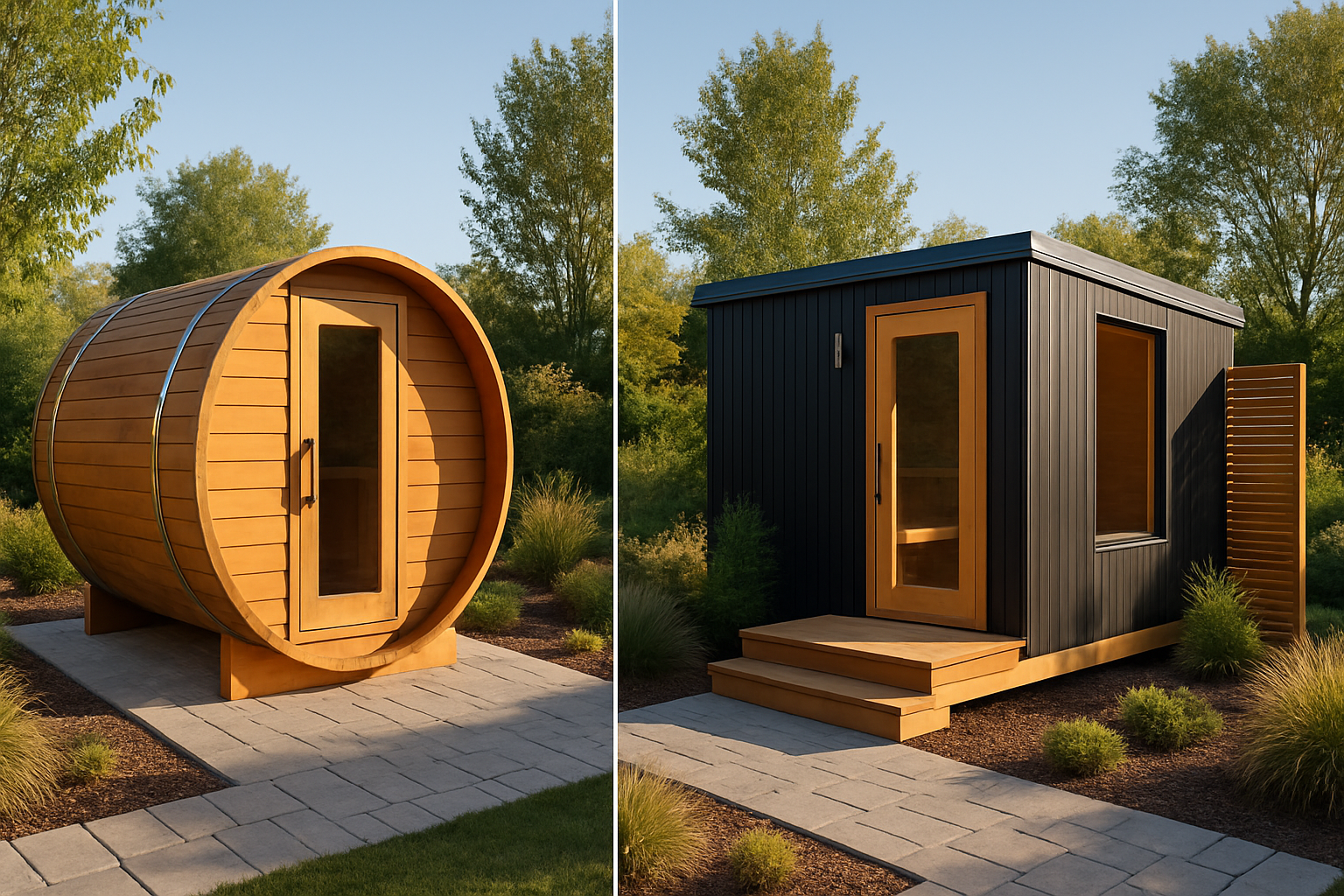
Comfort is more than a capacity rating
Sauna capacity ratings can mislead. A "four-person" sauna might physically seat four adults without offering much shoulder room, one bench level, and no full-length spot to recline.
One current 7-by-6-foot barrel model, for example, lists benches around 63 inches long, 20 inches deep, and 20 inches high, which creates compact seating but isn't the same experience as a deep, elevated upper bench built for lying down. The North American Sauna Society recommends a room at least six feet wide when lying down matters, and notes layouts typically place the main upper bench along the longest wall to maximize usable length.
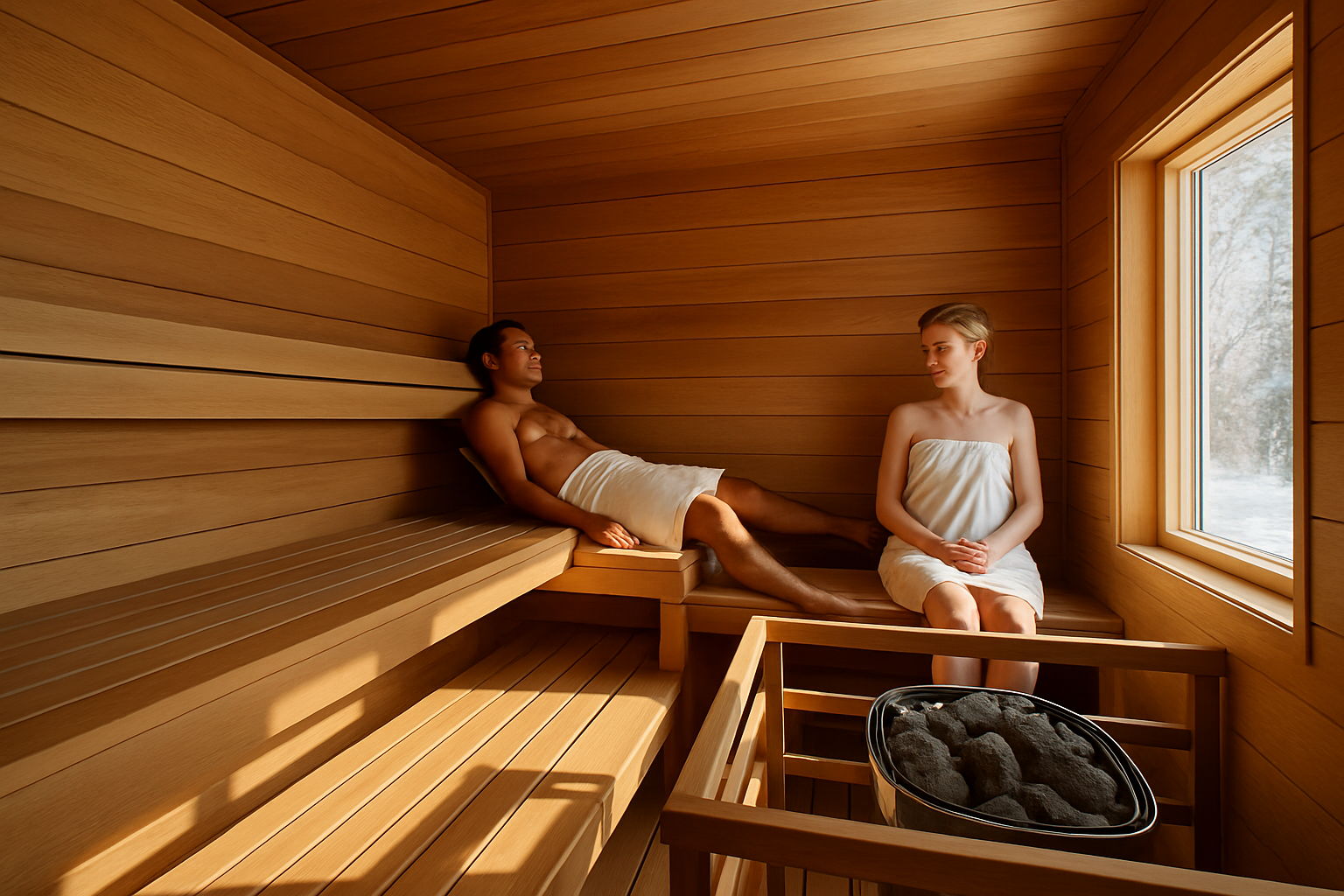
This is one of the biggest advantages of a cabin. Flat walls and a controlled ceiling let the builder design proper upper and lower bench levels, deeper seating, safer steps, backrests, L-shaped configurations, and enough length to actually lie down, organizing the room around the people using it instead of around the shape of the product. A barrel can feel intimate and cozy. A well-designed cabin can feel comfortable, spacious, and genuinely adaptable to how you'll use it.
What about heat retention?
Barrel saunas get promoted as efficient because the curved shape means less interior air to heat, and that can be a real advantage. Major barrel manufacturers commonly estimate 45 to 60 minutes to reach typical sauna temperatures under normal conditions, though outdoor saunas in northern winters can take longer.
The catch is that many traditional barrel designs use solid wood staves as both the interior surface and exterior shell, often with no separate insulated wall cavity, sealed vapour-control layer, rainscreen, or conventional roof assembly behind it. A custom cabin isn't automatically more efficient, a poorly built one can perform just as badly, but a properly built one gives the builder far more control over the thermal envelope: dedicated insulation, controlled air sealing, foil, an interior air space, tongue-and-groove cladding, and a separate exterior cladding system. This isn't just a custom-builder talking point either. Harvia's insulated Block cabin uses 30 millimetres of high-performance PIR insulation, which Harvia states performs comparably to roughly 60 millimetres of conventional rock wool and supports faster, more efficient heating.
Glass has to factor into that calculation too. Heater manufacturers increase required capacity for any glass or uninsulated surface, and a custom cabin lets the glass package, insulation, room volume, and heater all get designed together instead of bolted on as separate upgrades. In a Manitoba winter, that control actually matters.
Longevity depends on the whole assembly
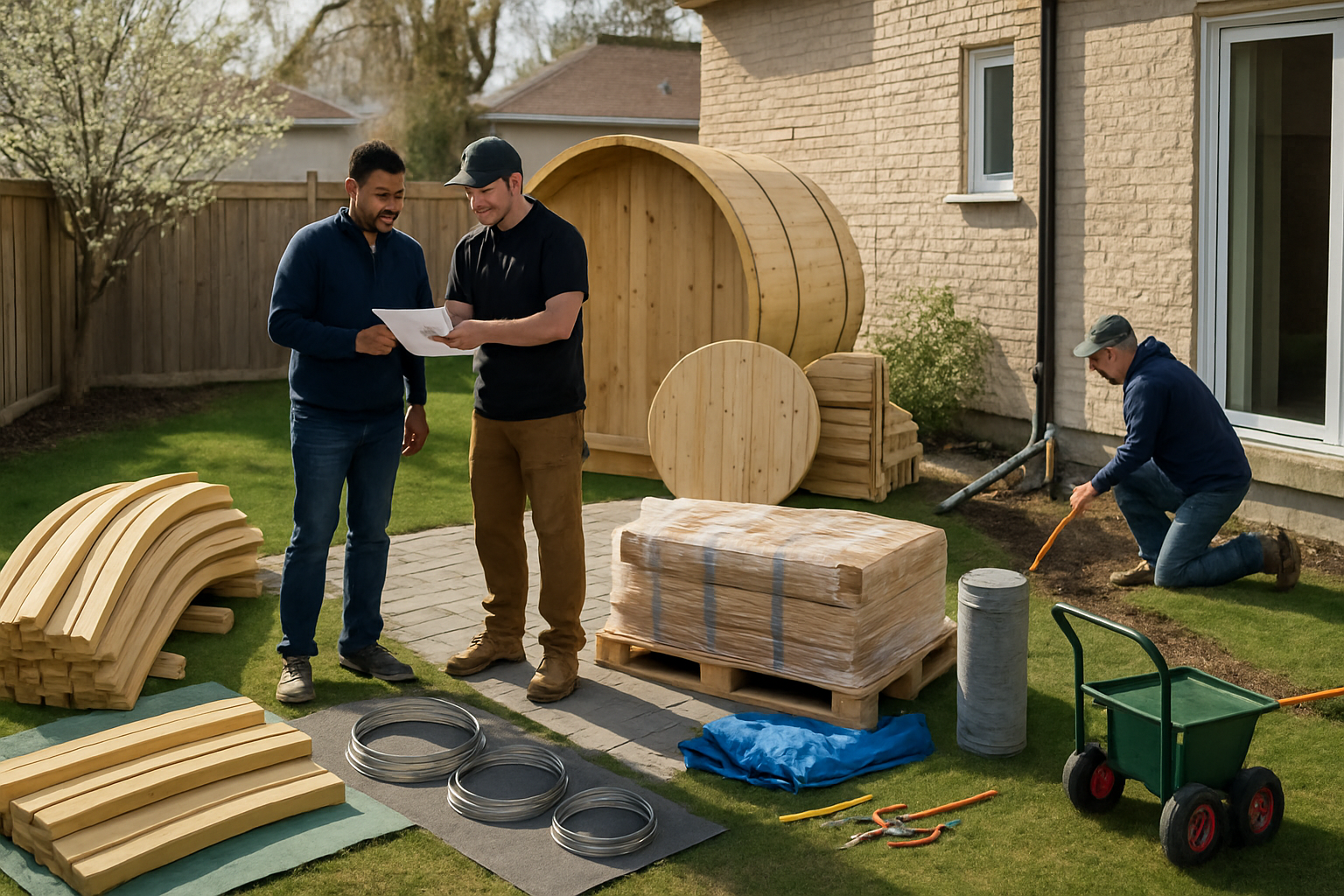
Both types need maintenance. A barrel's solid-wood construction naturally moves with humidity and weather, and a major barrel manufacturer advises owners they may need to tighten the metal bands or add filler staves as the wood adjusts, along with exterior staining and a firm, flat base. That doesn't make the product defective. It means wood movement and exterior upkeep are simply part of owning one.
A custom cabin has its own maintenance needs, but the components separate by function: the roof sheds water, the cladding protects the exterior, a rainscreen handles drainage and drying, the insulated structure controls heat, interior cladding creates the finish. That layered approach generally makes it easier to inspect, maintain, repair, or replace individual pieces without treating the whole structure as one exposed wood shell.
Warranty terms deserve real attention here too. A kit may carry a strong manufacturing warranty while still leaving the homeowner responsible for local labour, diagnosis, shipping, weather-related wear, and excluded wood conditions. One major kit manufacturer's limited lifetime room warranty, for example, covers manufacturing defects but excludes normal wear, rot, discolouration, and minor splintering, with replacement-component shipping charged under its own terms. That's a different arrangement than having a local builder who can actually return to the property and understands how the whole thing was put together.
Compare completed cost, not sticker price
A barrel kit almost always wins the initial price comparison, and that's worth stating honestly. But the advertised kit price isn't the completed-project price. The sauna still needs freight, unloading, a suitable base, assembly, electrical work, permits where they apply, weather protection, site access, and possibly landscaping restoration. Kit manufacturers themselves note their barrel kits ship for owner assembly, commonly need two or three people to put together, and run on a hardwired 240-volt heater that may require a licensed electrician.
Using the local planning example we've worked with, a $9,000 advertised sauna kit can become a $16,000 to $22,000 completed Winnipeg project once the full scope gets included. That range is an illustrative planning example, not a universal quote. Access, freight, heater size, electrical distance, foundation conditions, roofing, labour, and landscaping can all move that number significantly, and even after all of it, a barrel kit can still land materially cheaper than a premium custom cabin. The point isn't that the prices become equal. It's that comparing a kit's online sticker price against a custom builder's complete project quote exaggerates the actual gap. The fair comparison is completed barrel project against completed custom cabin project, and lifetime value beyond that includes how often the sauna actually gets used, whether people can lie down comfortably, how it performs in winter, how it fits the property, how easily it can be repaired, and whether local support sticks around after installation.
Aesthetics and customization
The barrel shape is distinctive, and on a cottage property, rural lot, or rustic backyard, it can look charming and intentional. Plenty of buyers genuinely prefer it, and that preference is entirely valid. The trade-off is that the shape largely determines the architecture. A custom cabin, by contrast, gets designed around the home and landscape: exterior siding, roofline, glazing, deck, privacy screens, entry location, change room, lighting, and the surrounding recovery area can all be coordinated together. Even manufactured premium cabin systems show this advantage. Harvia offers cabin dimensions, bench materials, wall panels, glass configurations, and lighting options that adjust around the user and the site. A barrel is usually an object placed in the yard. A well-designed cabin becomes part of the property's architecture instead.
Who each option actually fits
A barrel kit makes sense when the priority is a lower initial budget, the buyer likes the barrel shape, the site is straightforward, a large elevated bench isn't required, and the owner is comfortable coordinating the base, installation, electrical work, and future maintenance themselves.
A custom cabin is more likely worth the upgrade when the sauna will see real use through a Manitoba winter, comfort and lying-down space matter, several people will use it regularly, the owner wants the structure integrated into the property, or long-term local support matters to them. Neither buyer is wrong here. They're simply purchasing different levels of design, construction, responsibility, and service.
The Turon view
We don't argue every barrel kit is a bad sauna. That wouldn't be credible. Our position is that an insulated custom cabin usually delivers the strongest long-term solution for a premium Winnipeg or Manitoba property, because it gives us control over what actually determines the experience: bench height and usable space, insulation and air sealing, heater and glass sizing, ventilation and drying, exterior weather protection, architectural integration, and repairability and after-build service.
Turon clients also get a three-year warranty, with the optional Turon Care Package providing annual maintenance and routine inspections under the final service terms. A barrel kit offers an accessible route into sauna ownership. A custom cabin offers a sauna designed around the people, the property, the climate, and the years of use ahead of it. For the homeowner who values that difference, the upgrade is worth it.
