
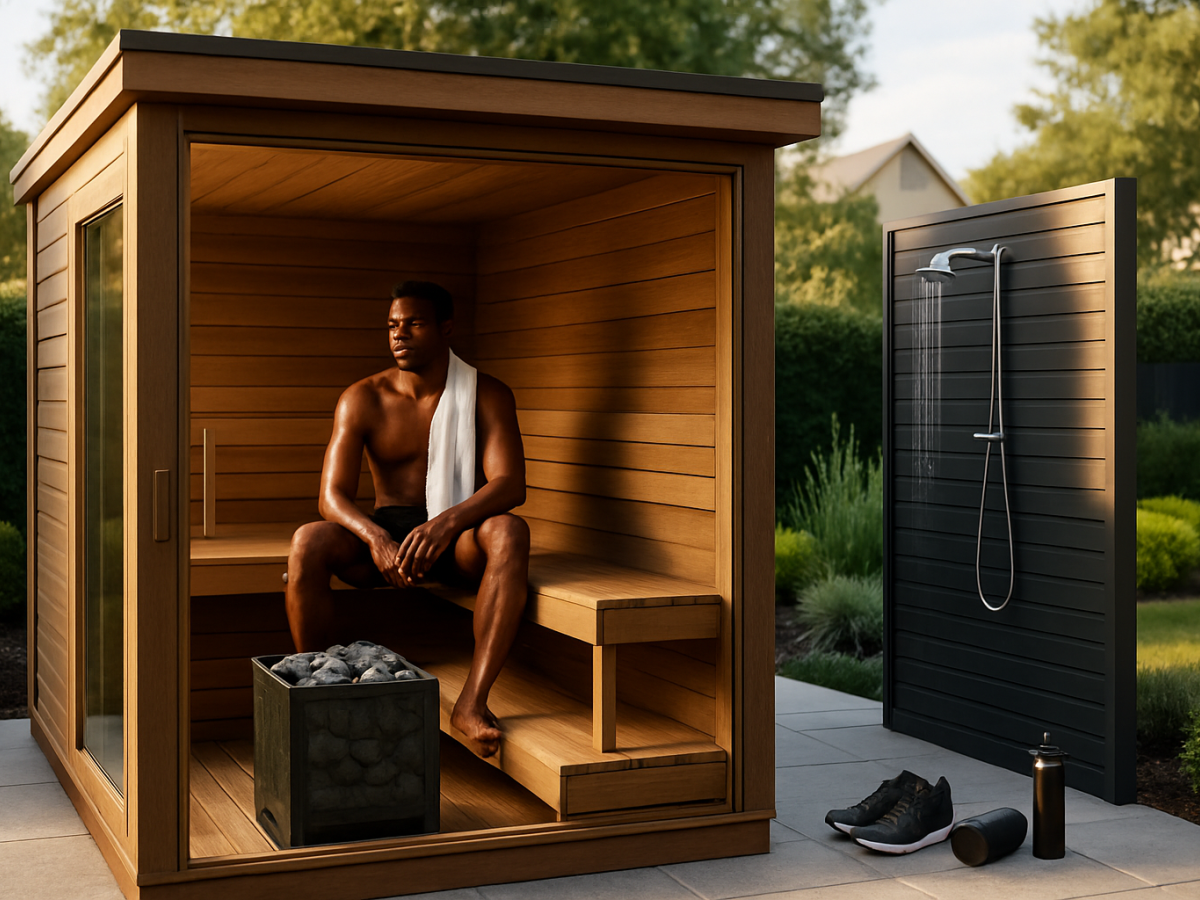
Saunas get associated with relaxation, but for a lot of athletes they're a real part of the training routine. Runners, fighters, hockey players, lifters, and endurance athletes all use sauna for different reasons: some for recovery after hard sessions, some to build heat tolerance and support endurance adaptation, others as part of a broader contrast-therapy or sleep routine.
None of that makes sauna magic. It doesn't replace smart programming, sleep, food, hydration, or rest. Used properly, though, it becomes a genuinely useful tool around training, which is a big part of why so many high performers keep coming back to it.
Recovery is the main draw
After hard training, the body needs to downshift, and heat exposure can support that: promoting circulation, encouraging relaxation, and reducing how sore or fatigued you feel afterward. A recent systematic review and meta-analysis found the overall performance effects are generally small, but regular post-exercise sauna bathing may improve endurance-related outcomes, and another review described post-exercise sauna use as a potentially practical strategy for recovery and training adaptation. Recovery isn't only physical, it's also about how ready you feel for the next session, and sauna can help build that transition.
Heat adaptation is a bigger piece of the story than most people expect
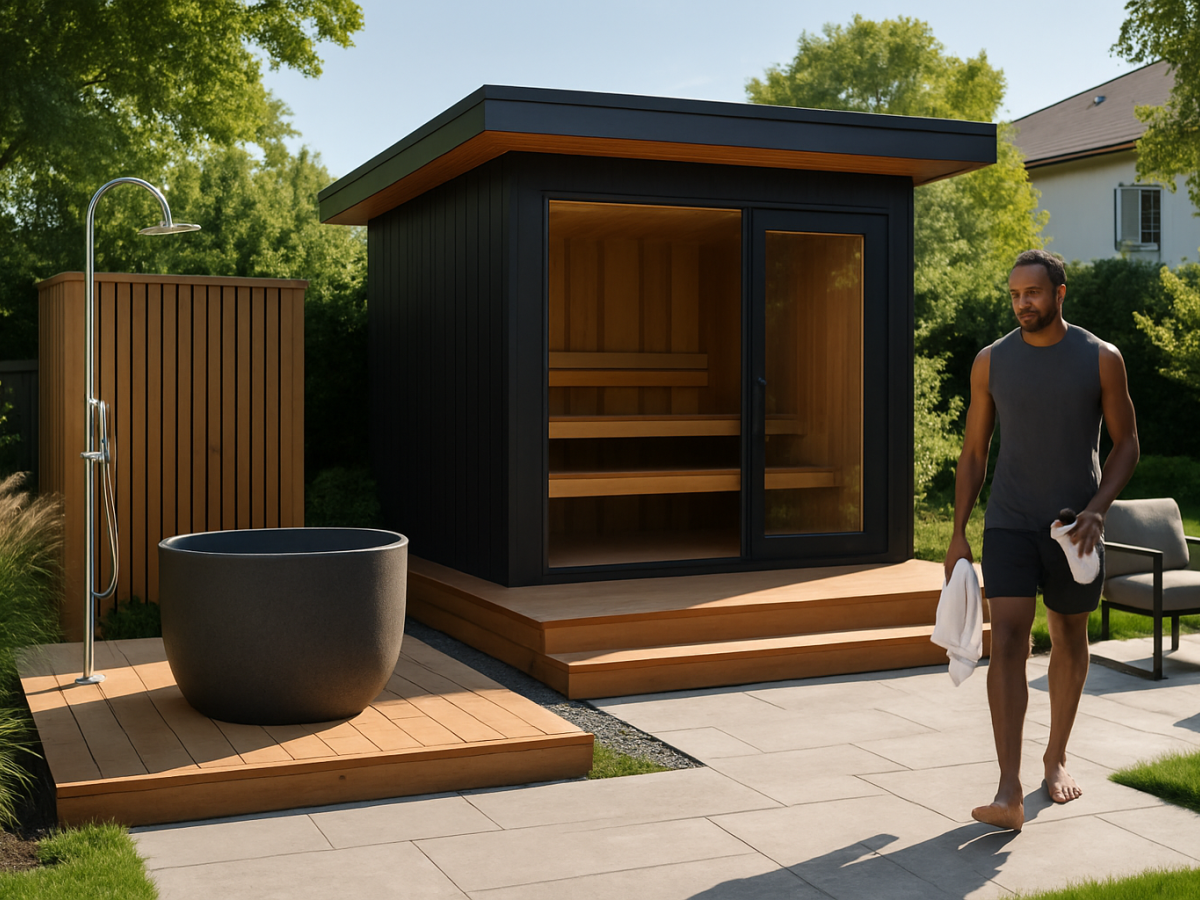
Athletes, especially endurance athletes, sometimes use sauna after training specifically to add heat exposure without having to run every workout in a hot environment. The goal is heat adaptation: a better sweating response, more cardiovascular stability, better tolerance to thermal stress. The broader heat-acclimation literature backs this idea, and sauna has been studied as one route to it after exercise.
Not every athlete needs a sauna block for this. But for anyone preparing for summer racing, multi-day training, or squeezing more adaptation out of a training block, sauna can be a useful add-on used carefully, and it has the advantage of happening after the workout instead of forcing the session itself into extreme heat.
How pros tend to structure it
There's no single perfect protocol, but there are patterns. Most athletes place sauna after training rather than before, since the session's already done, the body's already warm, and the sauna becomes part of recovery instead of an obstacle before performance. In practice, that usually looks like training first, starting hydration right away, a moderate sauna session, exiting before the heat turns excessive, then cooling down and continuing to hydrate.
For heat-adaptation goals, some athletes use sauna several times a week after training. For general recovery, others use it only after their hardest sessions, or fold it into a weekly rhythm. Either way, serious athletes tend to use sauna intentionally as part of a system, not randomly whenever it sounds nice.
Contrast therapy, used with some intelligence
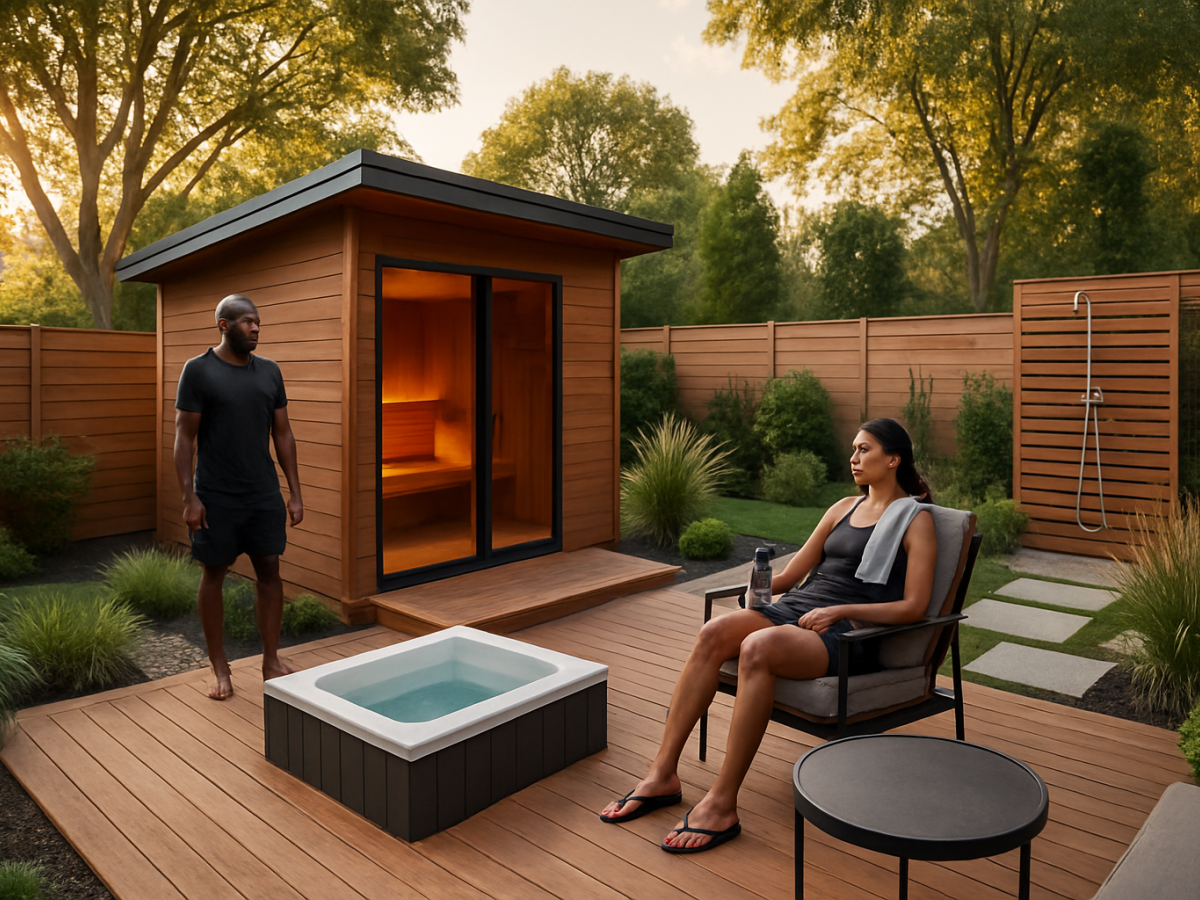
For a lot of athletes, sauna is only half the ritual. The other half is cold. Moving between sauna and cold exposure feels restorative and mentally sharpening, and in a cold climate like Manitoba that often means sauna followed by cool outdoor air, a cold shower, or a plunge.
There's no universally proven "best" contrast protocol, but in practice athletes tend to run short hot-cold rounds rather than turning every session into an endurance contest. The point isn't suffering for its own sake. It's a repeatable recovery ritual that leaves you feeling refreshed and ready again, and traditional sauna suits that especially well because it creates a fuller hot environment, air heat, stone heat, and löyly, that makes the cold contrast land harder.
The end-of-day piece
Athletes aren't always chasing a physiological edge. Sometimes they just want to recover better, switch off mentally, and sleep. Even with the direct research on sleep effects still developing, a lot of athletes use sauna as a wind-down tool because it builds in calm, routine, and separation from the noise of the day, and a recovery practice that helps someone actually slow down tends to be more sustainable than something complicated.
What a serious home setup actually needs
The best recovery tools are the ones easy to use consistently, which is the real appeal of home sauna ownership for athletes who train regularly. A serious setup doesn't need to be flashy, but it needs to be functional: a properly built traditional sauna, reliable heat and ventilation, enough room to sit comfortably after training, an easy path in and out of the space, optional access to cool air or a cold plunge, and lighting and layout built for recovery instead of distraction.
For one of our athlete-oriented clients, that's the entire appeal. The sauna isn't a luxury object sitting in the yard. It's part of the weekly training and recovery rhythm.
Cautions
Sauna should support training, not compromise it. That means staying on top of hydration, not overstaying in the heat, skipping it when sick or severely depleted, being careful after extremely hard sessions, and paying attention to dizziness, nausea, or unusual fatigue. It's also not a substitute for injury management, medical care, or the actual fundamentals of recovery. It's a genuinely good tool for the right person, but still just one tool.
The Turon view
This is one of the strongest cases for owning a proper outdoor sauna. Athletes don't just want relaxation, they want a recovery setup they'll actually use: private, repeatable, and built well enough to hold up under real use. In Manitoba, a traditional sauna works naturally with contrast therapy, winter air, and the kind of disciplined routine a lot of athletes already live by. Built right, it stops being a backyard feature and becomes part of the training system itself.
