
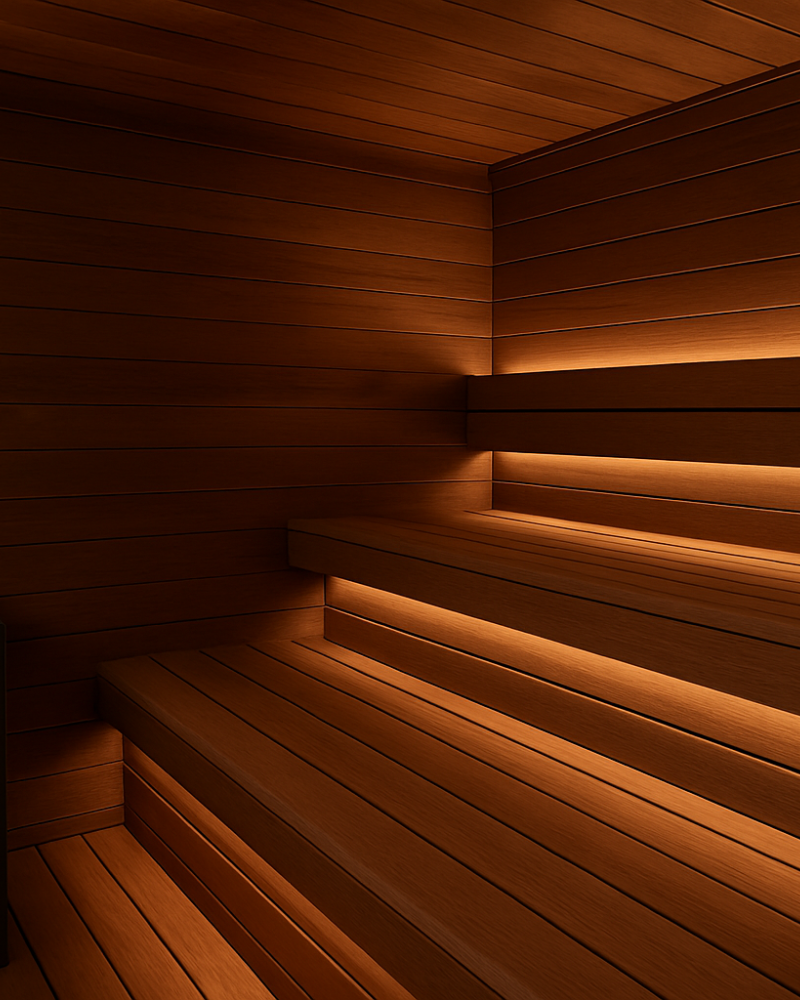
ThermoWood earns its place in premium sauna builds when stability, durability, and lower maintenance actually matter, not because it looks expensive. In the right spots, it's one of the strongest material choices available. In the wrong spots, it's an upcharge that isn't buying you anything.
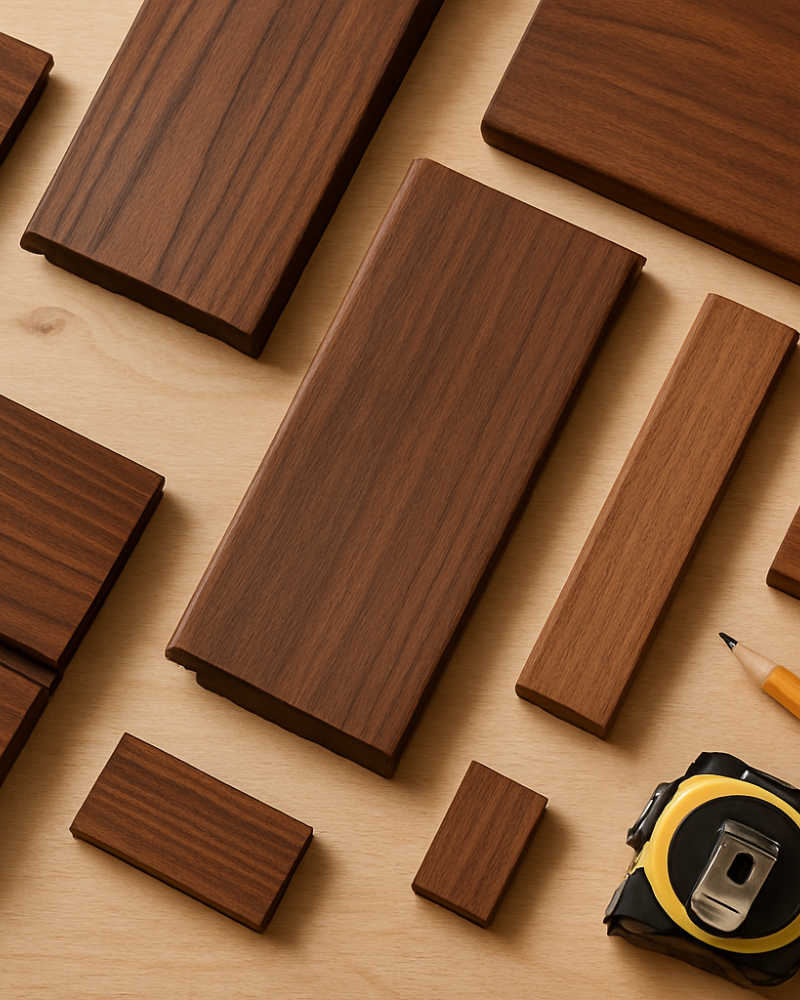
What ThermoWood actually is
ThermoWood is wood modified with heat and steam, no chemicals added. The process changes how the wood holds moisture and improves its dimensional stability, so it moves less than untreated lumber when humidity shifts. The International ThermoWood Association states that the process reduces equilibrium moisture content, improves dimensional stability, and increases resistance to biological degradation.
That matters because a sauna is an extreme environment: hot inside, moisture introduced during use, then cooling down, while an outdoor build also deals with snow, rain, deep cold, wind, and freeze-thaw movement on the outside. Ordinary wood swells, shrinks, cups, twists, and opens joints responding to all of that. Western Forest Products notes that moisture movement drives most of the swelling, shrinking, checking, and long-term stability problems in exterior wood. Thermal modification cuts that movement down by making the wood absorb less moisture in the first place, which is the real reason it belongs in the sauna conversation. Not because it's trendier wood. Because it's more stable wood.
Where it actually helps
Three things make ThermoWood work well in a sauna. Stability keeps interior boards holding clean lines, tight joints, and a finished look on walls, ceilings, benches, and trim instead of shifting over a season or two. Moisture resistance means it's less eager to absorb water than standard lumber, even though it's not waterproof and still needs proper ventilation, drainage, and drying behind it, which lines up with how Thermory describes thermally modified wood's resistance to warping, cupping, and swelling in exterior cladding, decking, and sauna use. And appearance: thermal modification deepens the wood's color into warmer, richer tones, ranging from clean and light to deep brown and character-rich depending on species. That opens up real design range: thermo-hemlock, thermo-ash, thermo-aspen, thermo-alder, thermo-pine, thermo-spruce, each with a different look, which matters when a sauna has to fit a custom home or a designed backyard instead of reading as a generic cedar box.
Where it actually gets used
The species and product class decide the right application. The International ThermoWood Association lists sauna interiors and benches as typical Thermo-S uses, where stability and visual quality matter most. For exterior work, their Thermo-D class is built for durability and weather exposure, suited to cladding, decking, terraces, windows, and doors. The material isn't interchangeable across those uses. The right product has to match the job, not just carry the word "ThermoWood" on a spec sheet.
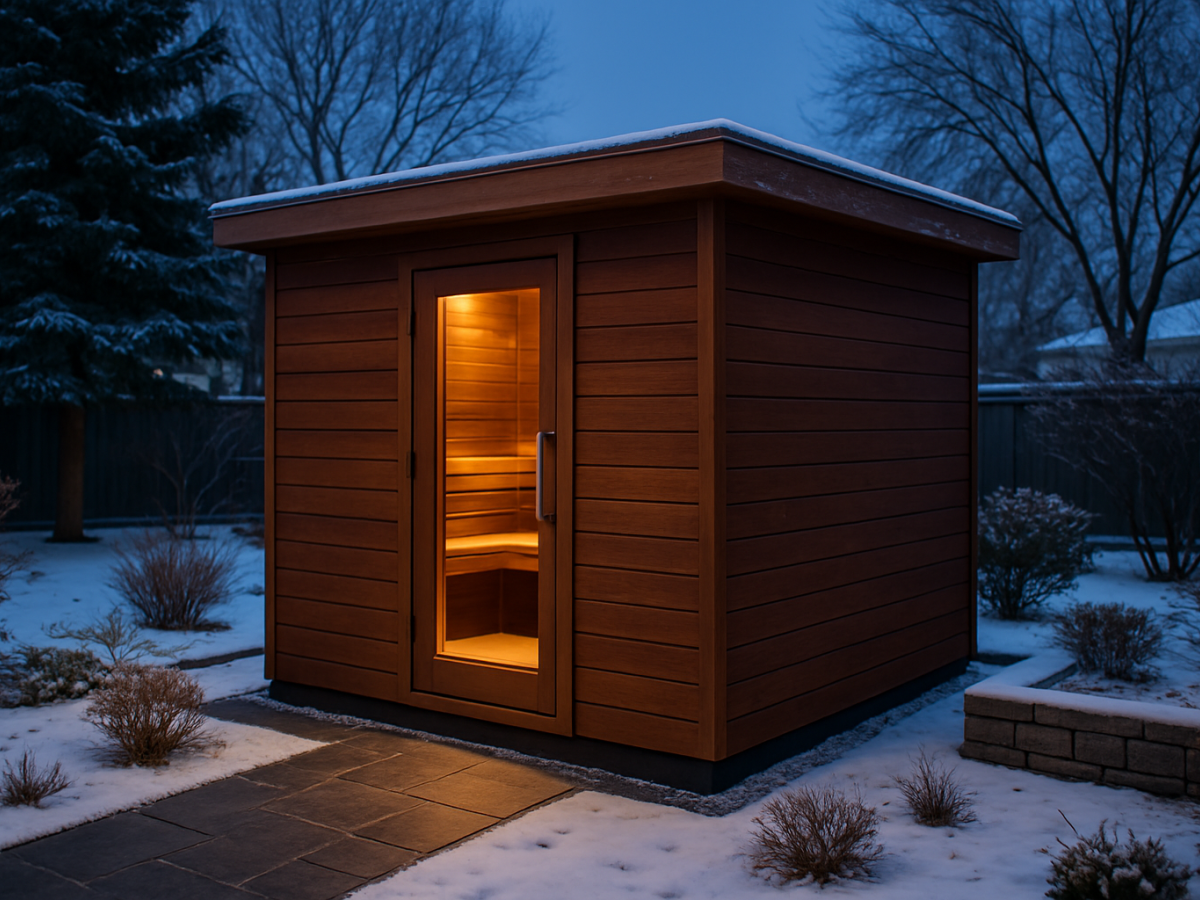
Why it matters outdoors in Manitoba
Outdoor sauna materials here take real abuse: hot inside, freezing outside, snow sitting on roof edges, wind-driven rain hitting siding, moisture finding small gaps, wood expanding and contracting on repeat. Because it absorbs less moisture and moves less, ThermoWood holds up better through that cycle on siding, trim, cladding, doors, and high-visibility details, keeping the sauna looking intentional instead of tired.
None of that replaces good building science, though. ThermoWood still needs the right wall assembly, a water-resistive barrier, a furring or rainscreen strategy, flashing, and a real drying path behind it. Good material doesn't fix bad detailing.
Maintenance and aging
ThermoWood is lower maintenance than ordinary exterior lumber, not maintenance-free. Left untreated outdoors, it weathers naturally to a silvery-grey patina. Thermory notes UV exposure causes that fading, and UV-resistant oils or stains can hold the richer brown tone if that's the look you're after. Inside the sauna, it comes down to use and drying habits: let benches dry, use ventilation properly, and skip coatings that aren't rated for sauna environments.
Cost
ThermoWood costs more upfront than standard untreated softwood. Thermory notes that premium can pay off over time through durability, lower maintenance, and dimensional stability. On a budget build, that math doesn't always work everywhere. On a premium build, it usually does, at least where the upgrade actually earns its cost, whether that's interior cladding, benches, exterior siding, trim, or floor details, while other materials handle the parts where they make more structural or economic sense.
Where it isn't the right call
ThermoWood isn't a structural substitute without confirming the product's rating, since heavy thermal modification can reduce some mechanical properties. It won't fix poor drainage, bad flashing, or wood sitting in constant wet contact. It isn't fireproof, so heater clearances and heat shields still apply regardless of material. And if the priority is the lowest possible upfront price, a simpler material package may genuinely fit better.
The bottom line
ThermoWood is worth considering when stability, moisture resistance, appearance, and long-term maintenance actually matter to the build, which is most true in custom outdoor saunas that have to look good and survive real weather. Species, profile, exposure, installation, and the wall assembly behind it all still have to be specified correctly for any of that to hold up.
At Turon Saunas, we use ThermoWood because it supports the kind of sauna we build: one that looks refined, performs properly, and holds up through Manitoba conditions when it's used in the right place for the right reason.
