
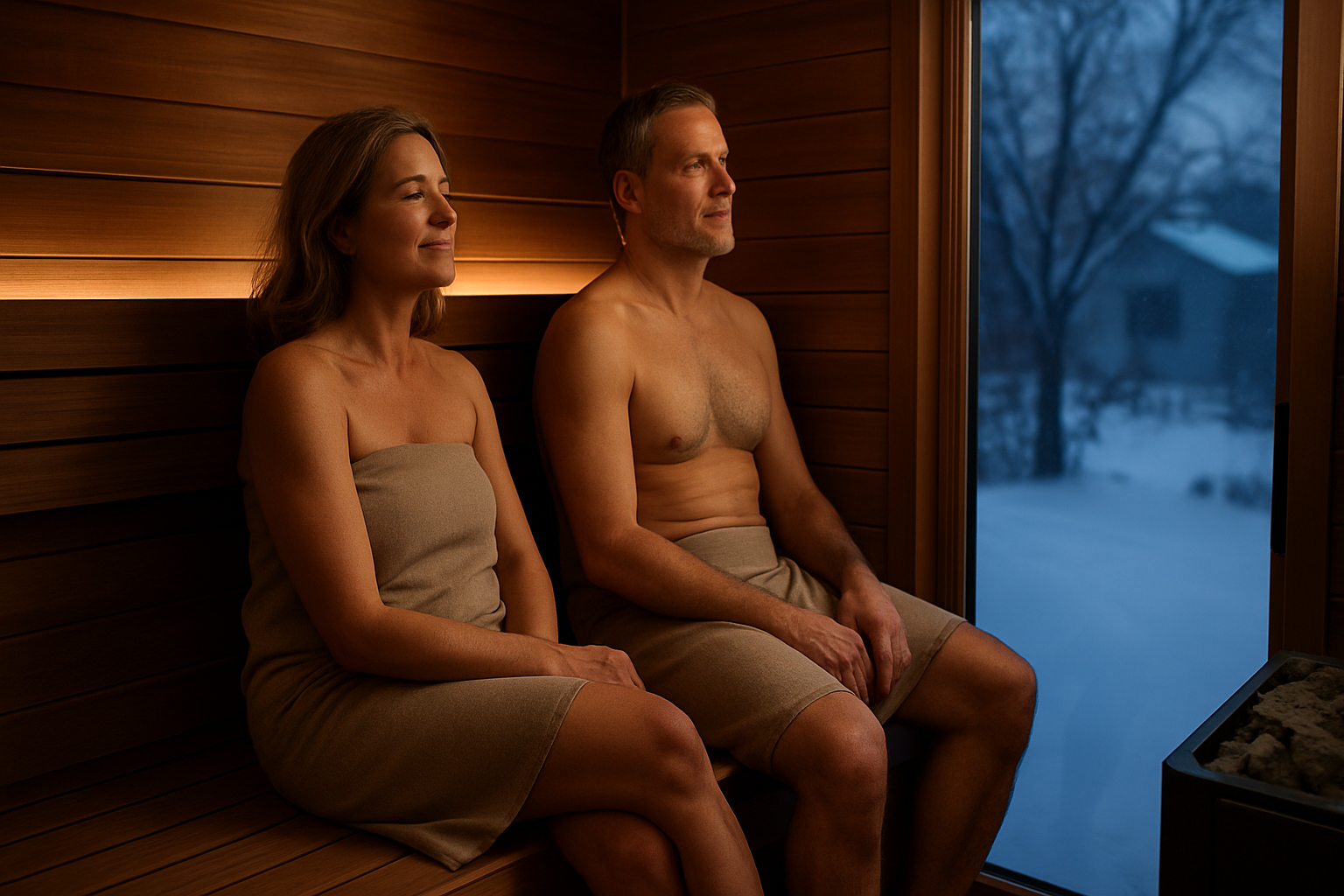
Sauna has moved far beyond the spa. It's now promoted for cardiovascular health, workout recovery, stress reduction, sleep, longevity, and even "detoxification." Some of those claims are supported better than others.
The honest position is that regular sauna bathing appears to be a useful wellness practice. The strongest evidence concerns cardiovascular responses and long-term associations with heart health. Research on recovery and mental well-being is promising but less developed. Sauna is not a cure, a replacement for exercise, or a substitute for medical treatment.
Most of the major long-term research has examined traditional Finnish-style sauna bathing. Results from those studies shouldn't automatically be applied to every infrared cabin, steam room, hot tub, or heat-therapy product.
What happens to the body in a sauna
Sauna heat raises skin temperature, increases blood flow to the skin, elevates heart rate, and produces sweating, as the body works to release heat while maintaining circulation.
In an experimental study of 102 adults with at least one cardiovascular risk factor, a 30-minute Finnish sauna session reduced measured blood pressure and arterial stiffness immediately afterward. Heart rate increased during the session, while average systolic blood pressure fell from 137 to 130 mmHg and diastolic pressure fell from 82 to 75 mmHg. Those are short-term effects from one session. They don't prove sauna treats hypertension, but they help explain why repeated heat exposure is being studied.
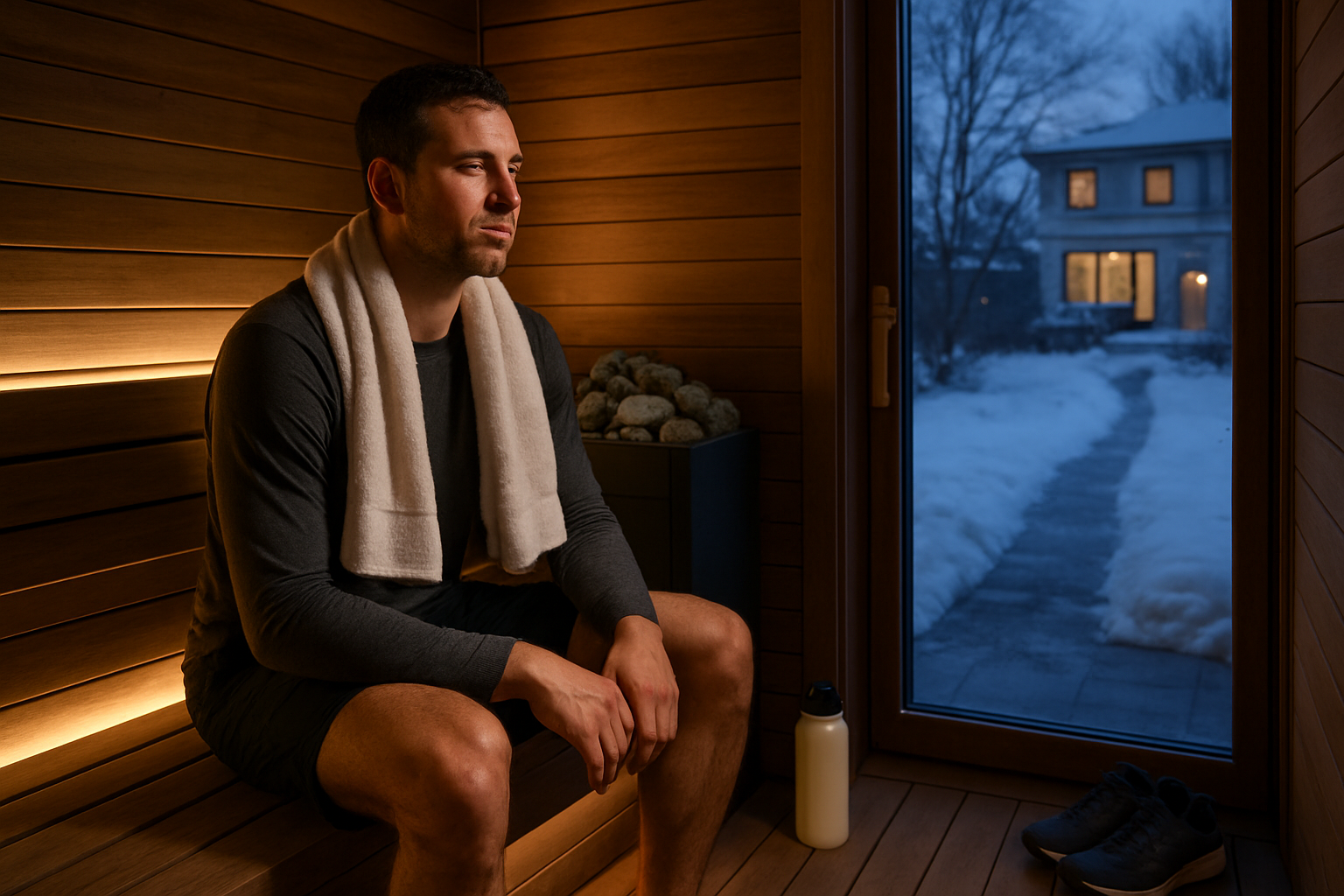
The cardiovascular evidence is the strongest
The best-known sauna study followed 2,315 middle-aged Finnish men for a median of 20.7 years. Men reporting more frequent sauna use had lower rates of sudden cardiac death, fatal cardiovascular disease, and all-cause mortality than men reporting one session per week.
That result has to be described accurately. It was an observational study. It found an association, not proof that sauna alone caused the lower risk. Frequent sauna users may have differed in lifestyle, health, or social factors researchers couldn't fully control for.
Controlled evidence also suggests sauna can complement exercise. In a 2022 randomized trial, adults with cardiovascular risk factors completed eight weeks of supervised exercise. The group that added a 15-minute sauna after exercise three times per week saw greater improvements in cardiorespiratory fitness, systolic blood pressure, and total cholesterol than the exercise-only group. Sauna doesn't replace a workout. It may add something useful to an already healthy routine.
Recovery, soreness, and performance
Athletes often use sauna because warmth feels good after training and fits naturally into a recovery ritual.
The research here is encouraging but small in scale. A randomized crossover study involving 16 male basketball players found that a 20-minute infrared sauna session after resistance exercise reduced subjective muscle soreness, improved perceived recovery, and limited the decline in one explosive-performance measure compared with passive recovery. That's useful evidence, not a universal promise. The study was small, involved trained male athletes, and used infrared heat specifically. Sleep, hydration, nutrition, and sensible training still matter more than any single sauna session.

Stress, relaxation, and sleep
Relaxation may be sauna's most immediate benefit.
A 2024 population study from northern Sweden found sauna users reported better general health, more energy, better sleep, less anxiety, and greater happiness than non-users. Sauna users were also somewhat younger, more active, and less likely to smoke, among other lifestyle differences, so the study can't prove sauna caused those outcomes on its own.
Still, the ritual has practical value. A quiet, warm room creates distance from phones, work, noise, and daily pressure. For couples and families it can become protected social time too. That's hard to measure, but it matters.
What the research doesn't show
Sauna marketing often moves faster than sauna science. Current evidence doesn't justify presenting sauna as a cure for heart disease, anxiety, depression, chronic pain, or other medical conditions, and it shouldn't replace medication, exercise, sleep, nutrition, or professional treatment.
Sweating is the body's cooling response. A lower number on the scale right after a sauna session is mostly fluid loss, not meaningful fat loss. Broad claims that sauna "detoxifies" the body go further than the clinical evidence supports. Reviews of sauna research describe potential cardiovascular and symptomatic benefits, but they don't establish sauna as a universal detox or weight-loss treatment. Sauna can be valuable without turning it into magic.
How often and how long?
There's no universally established medical dose for sauna use. The major Finnish cohort compared people using sauna once, two to three times, and four to seven times per week, and sessions shorter than 11 minutes, 11 to 19 minutes, and longer than 19 minutes. Those categories describe participant habits. They aren't a prescription for every person, and experimental studies often use sessions of roughly 15 to 30 minutes, with temperature, humidity, sauna type, health status, and personal tolerance all varying considerably.
A conservative approach: start with shorter sessions, increase only when well tolerated, stay hydrated, and leave immediately if you feel dizzy, faint, nauseated, confused, unusually short of breath, or otherwise unwell.
Who should be cautious
Heat places real demands on circulation and fluid balance. People with unstable heart disease, a recent heart attack, severe aortic stenosis, recurrent fainting, very low blood pressure, kidney or fluid-balance problems, pregnancy, or medications that affect blood pressure, sweating, hydration, or heat tolerance should get individualized medical advice before beginning regular sauna use.
Alcohol should never be combined with sauna use. A clinical review identified increased risks of low blood pressure, abnormal heart rhythms, accidents, and sudden death when alcohol and sauna bathing are combined.
The Turon view
At Turon Saunas, we don't use health claims to oversell a build. The value of a well-designed outdoor sauna is that it makes a consistent wellness ritual easier to keep up. Proper heater sizing, ventilation, bench geometry, insulation, lighting, and cold-climate construction create a room people actually want to use.
That doesn't guarantee a medical result. It creates the conditions for regular use: recovery, quiet, connection, and a better relationship with winter. The evidence is promising, especially for cardiovascular health. The responsible message is simple: use sauna as one part of a healthy lifestyle, not as a replacement for one.
This article provides general educational information and is not medical advice. Anyone with a medical condition, pregnancy, heat intolerance, or questions about medication should consult a qualified healthcare professional before beginning sauna or contrast-therapy routines.
