
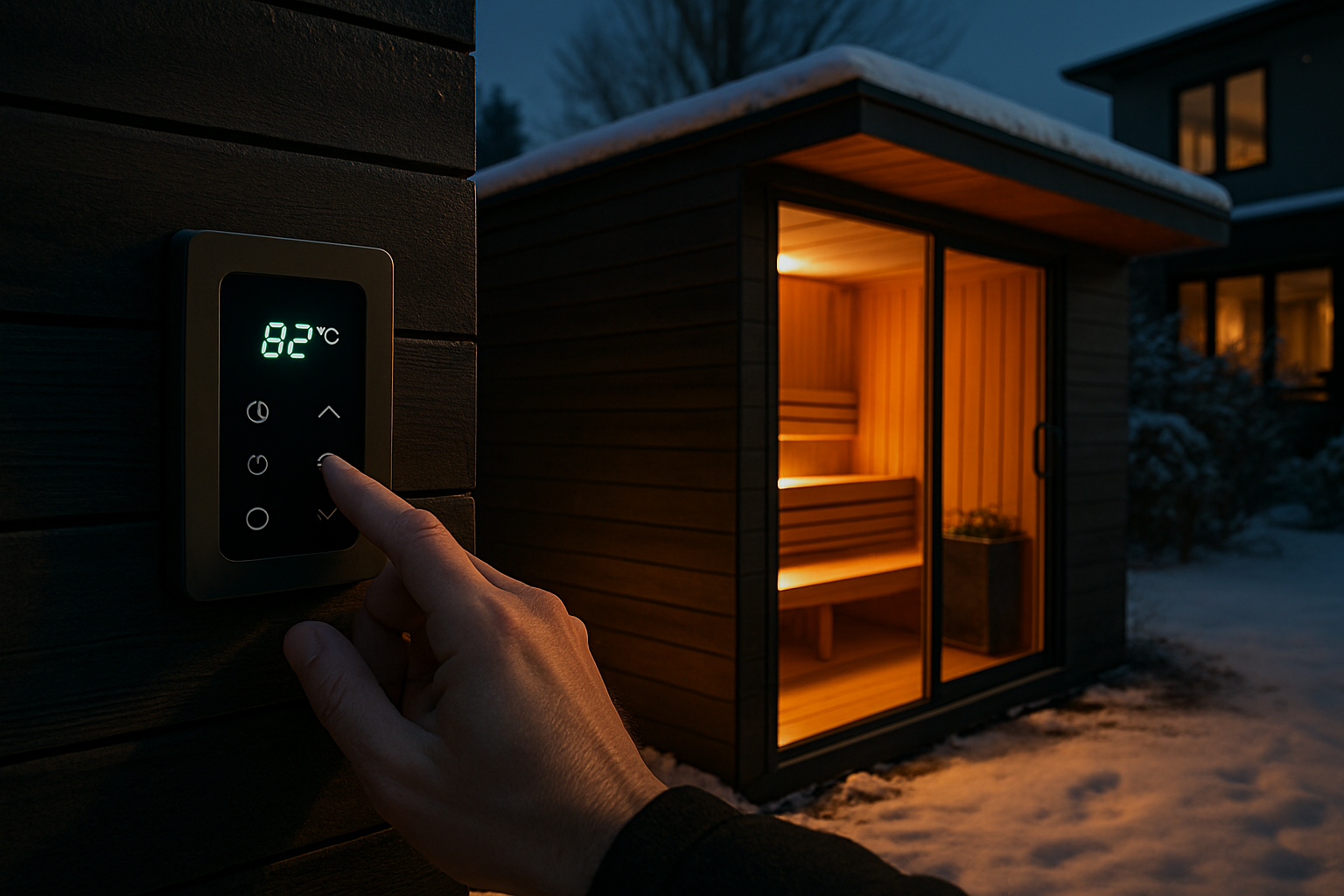
The question homeowners ask most before buying an outdoor sauna is simple: how much does it actually cost to run?
The honest answer is usually less than people expect in Manitoba, but it depends on the heater, the size of the sauna, the insulation quality, the season, and how often it gets used. A poorly insulated sauna wastes heat every session and forces the heater to work harder than it should. A properly built one holds heat and heats predictably. Running cost isn't really a heater question. It's a build-quality question.
Electric running costs
Electric is the easiest to estimate because power is billed by the kilowatt-hour. Manitoba Hydro lists the 2026 residential standard electricity energy charge at 9.970 cents per kWh, so every 10 kWh runs just under a dollar before taxes and fixed charges.
Harvia's example for an insulated family sauna with a 6 kW heater puts usage at roughly 7 to 9 kWh over a two-hour period, warm-up included. At Manitoba's 2026 rate, that's about $0.70 to $0.90 per session. A larger outdoor sauna with an 8 kW or 9 kW heater tends to land closer to $1.00 to $1.80 per session, depending on insulation, glass area, outdoor temperature, and how long the heater stays on.
That's rarely the real cost of ownership, though. The bigger cost is building the sauna poorly and spending years fighting heat loss it never had to have.
Wood-burning running costs
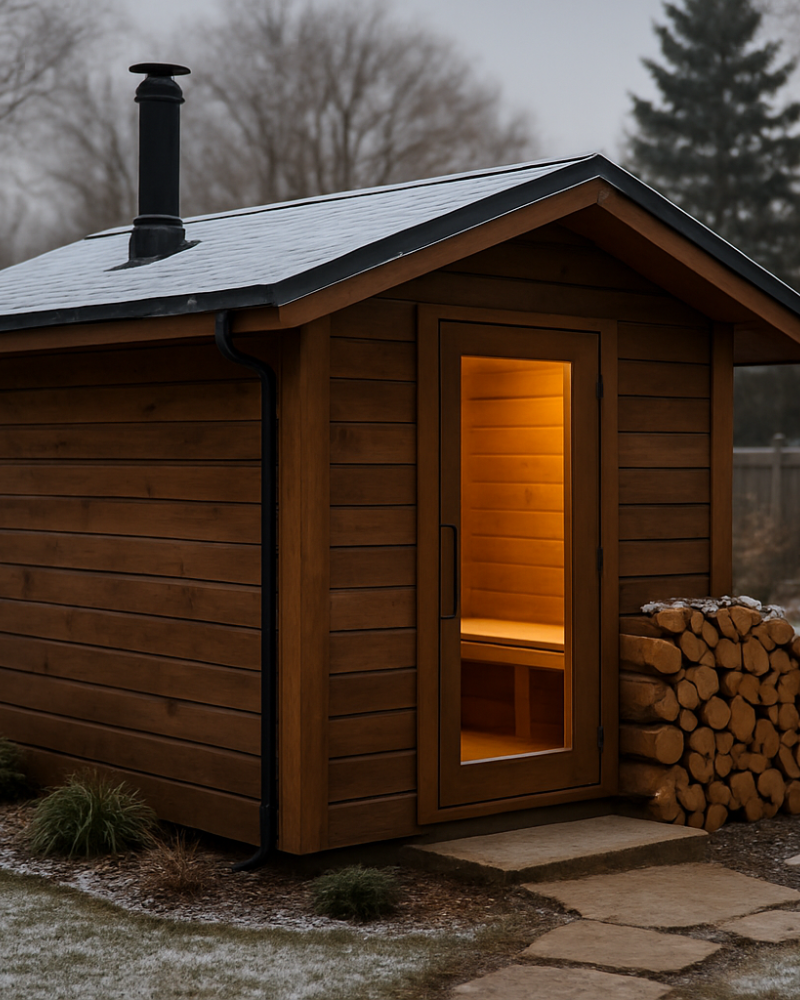
Wood is harder to price out because it's sold so many different ways: bags, bundles, face cords, half cords, full cords, delivered truckloads. Cost per session comes down to species, moisture content, stove size, outdoor temperature, and how long you keep the fire going.
As a local reference, Winnipeg Firewood lists 2026 full-cord pricing at $500 for ash, $525 for birch, and $550 for oak, delivered to Winnipeg and surrounding areas. Their listed heat values run 19.9 million BTU per cord for ash, 20.3 million for birch, and 26.3 million for oak. Buy by the cord and store it properly, and a session can cost a few dollars in fuel. Buy small convenience bundles instead, and that number climbs fast.
Wood heat also costs something electric doesn't: time. Dry firewood, storage, kindling, ash cleanup, someone willing to start and manage the fire. For some homeowners that's the whole appeal. For others, it's the reason the sauna stops getting used.
Winter costs more than summer, but the build matters more than the season
A summer sauna starts closer to target temperature, so the heater has less work to do. In winter, especially here, it's starting from a much colder baseline and has to warm the air, stones, benches, walls, and glass from scratch. Winter sessions cost more than summer ones, full stop.
But construction quality is what actually decides how much more. A well-insulated sauna with good air sealing, a correctly sized heater, and controlled ventilation heats efficiently and recovers fast once the door opens. A poorly built one gets hot eventually, but it takes longer, loses heat faster, and never quite feels consistent. The cheapest sauna to buy isn't always the cheapest one to run.
Insulation is the hidden cost driver
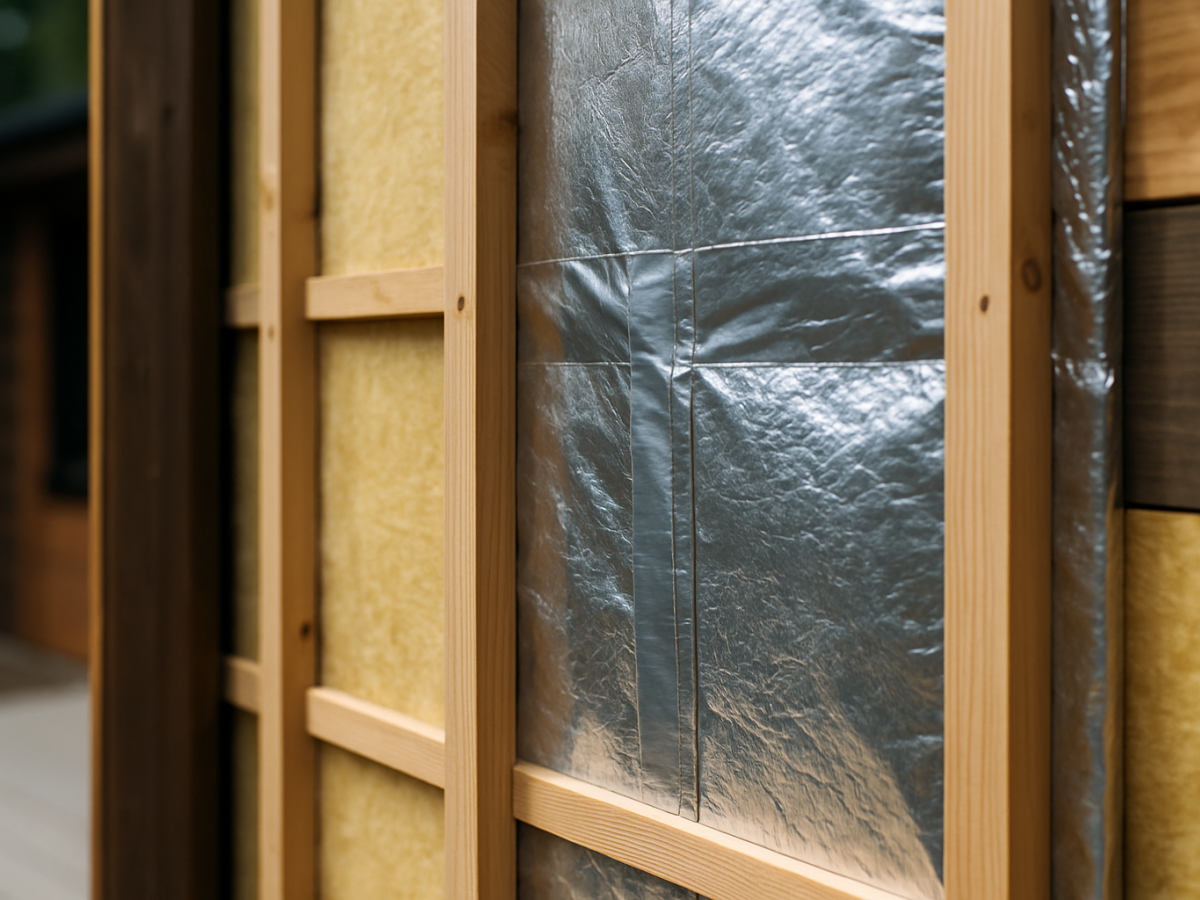
The better a sauna holds heat, the less the heater has to fight the outdoors. That's not about stuffing in more insulation, it's about the whole wall and ceiling system working together: insulation, foil vapor barrier, taped seams, an interior air gap, tongue-and-groove cladding, and ventilation planned to match. Done properly, the sauna heats more predictably and feels more comfortable every time. It's also why a custom build tends to run cheaper than a kit over time. The savings aren't just on the power bill. They show up as comfort and durability too.
Cutting operating cost
Beyond the build itself, habits matter: the right heater size for the room, stones stacked so air can actually move through the heater, the door kept closed during warm-up, ventilation used with intention instead of left wide open, seals and hardware maintained, dry firewood if you're burning wood. Harvia notes the heater doesn't run at full power the whole session either. Once it hits temperature, the thermostat cycles it to hold steady, so correct sizing and sensible settings do real work on the bill.
Electric or wood, the real question is which you'll actually use
Electric usually wins on convenience, predictability, and city lots. Wood usually wins on rural properties, lake lots, and for people who genuinely enjoy the ritual of building a fire. Neither one is cheap or expensive in absolute terms, they're just cheap or expensive relative to how you'll actually use the sauna.
At Turon Saunas, we treat operating cost as a build-quality question from the start: insulation, air sealing, heater sizing, ventilation, and cold-climate detailing aren't extras, they're what determines whether the sauna heats properly, holds that heat, and makes sense to use all year in Manitoba.
